
Key Takeaways
- Scoring goals is important, but what you do before and after the shot also counts.
- Your role, age, the level of competition, and your club’s playing style all shape how your performance should be viewed.
- Practice receiving the ball, finishing, and making decisions while facing real opponents.
- Measure your progress by how often you perform well in matches, not just by a single standout moment.
- Combine statistics with video and your coach’s feedback, but don’t rely on numbers alone to judge your performance.
Table of Contents
What Do Scouts Look For In A Striker?
Scouts look at much more than just your goal tally. They pay attention to your finishing, first touch, movement, tactical awareness, physical traits, and mentality. They also think about whether your strengths fit the team and its playing style.
A striker who holds up the ball and involves midfielders brings something different than one who runs behind defenders. Neither style is always better. What matters most depends on your role, age, competition level, and the kind of football the club wants to play.
Scouting professional strikers is about more than just one good game. Clubs use live observation, video analysis, stats, and reports to watch players in different matches and situations.
By watching you several times, scouts see if your skills work against different opponents, when your team is ahead, when you are behind, or when you get little support.
What Technical Skills Do Scouts Look For In A Striker?
Your technical skills decide if you can turn a promising attack into a real chance, especially when you’re under pressure. Even a great run or position means little if your touch, pass, or finish fails when a defender gets close.
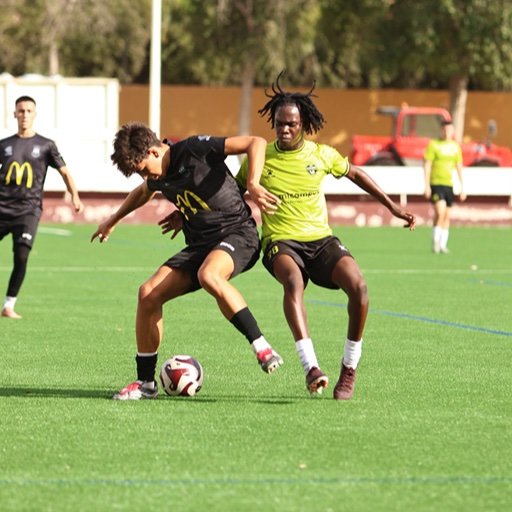
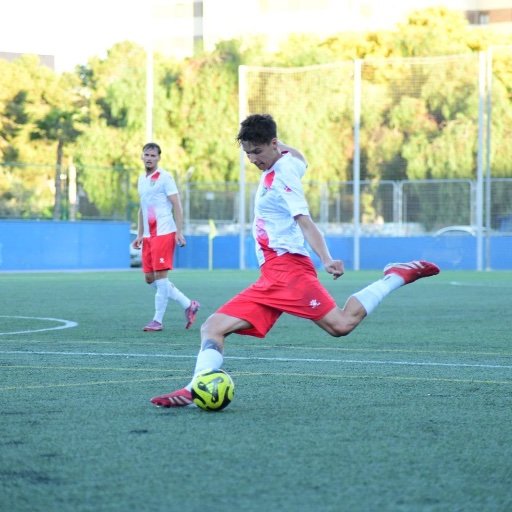
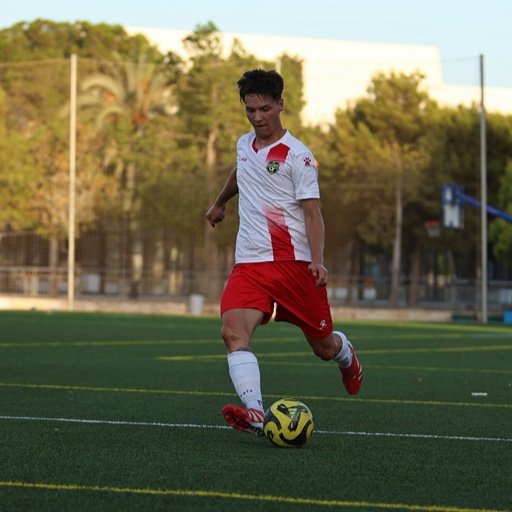
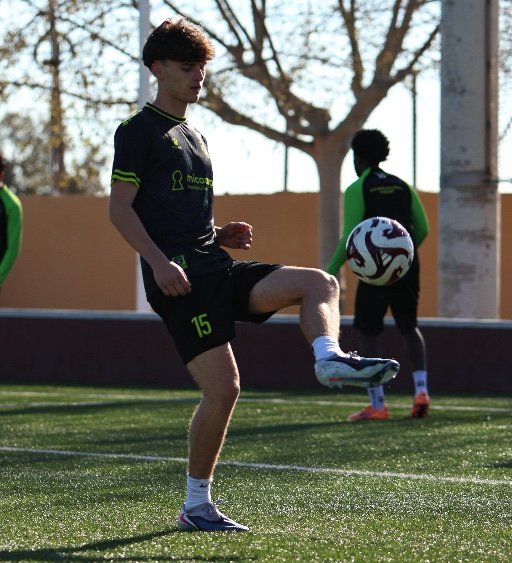
Your first touch and ball control should set up your next move. If a defender is right behind you, focus on protecting the ball and keeping control. If you have space in front, receive the ball facing forward and attack the goal right away.
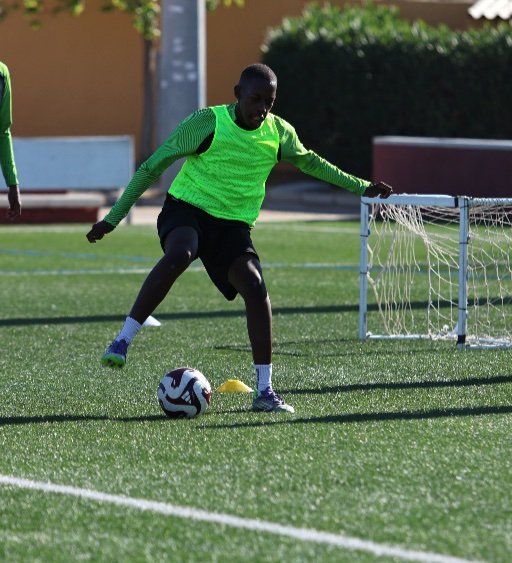
You need different ways to finish: shoot first-time, take a touch before shooting, use your weaker foot, and react quickly to rebounds. When you dribble, aim to create a chance to shoot or pass, not just to show off skills. Speed can help you get away from a defender after your touch, but remember that acceleration is a physical skill, not a technical one.
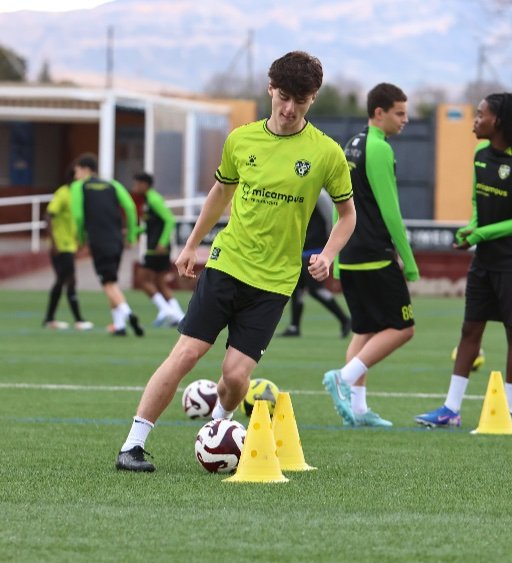
In our academy sessions, we practice receiving and finishing, cutbacks, one-on-one situations, and using the weaker foot. Our coaches help players with details like the position of the supporting foot, body angle, and where the first touch goes.
Technical skill also means working with teammates and making good decisions when you have the ball. Practice passing to a teammate, moving again, and choosing whether to shoot, pass, or dribble next. We suggest looking back at your choices as well as the result. Scoring a goal doesn’t always mean every decision before it was the right one.
During our three-against-two finishing drills, we use a six-second window for attacking. This helps players practice making quick decisions and using good technique under pressure, instead of only judging strikers when they have lots of time and space. After each play, think about whether taking the shot was the best choice or if another pass could have led to a better chance.
TRAIN THE QUALITIES SCOUTS ACTUALLY ASSESS
At Alicante Football Academy, we work with strikers on finishing, movement, first touch, decision-making and tactical awareness. See how our programme combines structured coaching with opportunities to train in a Spanish football environment.
Explore our academy programme
What Movement And Positioning Do Scouts Look For In A Striker?
Off-ball behavior is one of the most revealing parts of striker scouting because it shows how well you understand space, defenders, and your teammates’ needs.
Good movement is not just about running all the time. Scouts pay attention to where, when, and why you move and if your actions give your team an advantage.
Sometimes, the best choice is to run into space behind the defense. Other times, it helps to drop back and offer the midfielder a passing option before moving again.
Near the goal, your position should help create chances for yourself or a teammate. When you watch your games, ask yourself if your movement made space, got you away from a defender, or gave the player with the ball a good option.
How Important Are Work Rate And Defensive Contribution In A Striker?
Modern strikers are expected to make an impact even when they don’t have the ball, not just by scoring goals.
Scouts pay attention to how hard you press, where you position yourself defensively, how you track back, and how well you stick to the team’s tactics. Pressing at the wrong time can leave gaps for the other team, but pressing at the right moment can push play into safer areas.
What matters most isn’t how much you run, but whether your defensive work helps your team win the ball back, block passes, or slow down the other team.
BUILD A MORE RELIABLE FINISHING GAME
Good finishing is more than taking more shots. Learn how to practice your first touch, accuracy, power and finishing under pressure with exercises we use and recommend for developing attacking players.
See our finishing drills
What Should A Striker Do When Their Team Does Not Have The Ball?
Stick to the pressing triggers you’ve practiced, block important passing lanes, and stay close to your teammates.
If you lose the ball, press right away if teammates are close enough to help. If not, get back into position instead of going forward by yourself. Check with your coach to see which option your team prefers.
Keep following these steps even if you haven’t had much of the ball. We teach pressing angles to strikers so your movement gives teammates a clear signal. Focus on the timing, direction, and support during a press, not just on making a tackle.
Which Physical Qualities Matter Most For A Striker?
You should always judge physical qualities based on the situation. The pace, acceleration, strength, balance, agility, endurance, and jumping ability a striker needs depend on their role, age, league, and the team’s tactics.
Strength and balance help you handle contact and keep the ball. Agility lets you react quickly to the ball. Pace and acceleration help you get away from defenders, endurance lets you repeat actions, and jumping ability is useful in the air.
For younger players, physical development changes with age and growth. Being stronger or faster now does not always mean you will have more potential in the future.
There is no one perfect physical profile for all strikers. What matters most is whether your physical qualities help you do what your role and team need.
Should A Striker Be Fast?
Speed helps, but not every striker needs to be the fastest on the field.
If you’re a forward facing a high defensive line, focus on threatening the space behind the defenders. If you receive the ball with your back to goal, your role might be to protect the ball and link up with teammates.
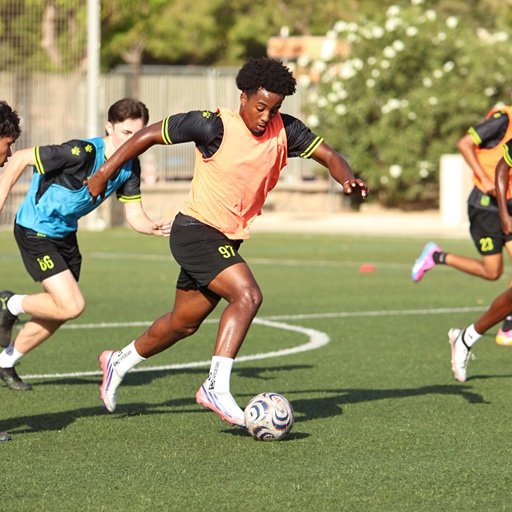
Practice your acceleration and timing at the same time. By reading the play and picking a smarter starting spot, you can get away from defenders without needing to win a long sprint.
What Mental Qualities Should A Striker Have?
Your mentality shapes how you play after missing chances, during tough games, when fighting for your spot, and when you go through goal droughts.
Scouts notice your confidence, focus, resilience, drive, discipline, and how eager you are to learn by watching what you do. If you miss a chance, get involved again. In tough matches, keep your mind on your job. If you are not in the starting lineup, work hard in training and take feedback well.
We look at your attitude and training habits as well as your skills and effort. Mentality is something we judge over the whole game and over time, not just from one moment of frustration or emotion.

What Striker Types And Archetypes Do Scouts Look For?
A striker’s role shows what qualities are most important for the team. Talk with your coach about your strengths using this comparison, instead of seeing the categories as strict labels.
| Striker profile | Main contribution | Actions to demonstrate |
|---|---|---|
| Penalty-box finisher | Gets into scoring positions close to goal. | Separates from markers, attacks deliveries and reacts to rebounds. |
| Target forward | Gives the team a reliable forward outlet. | Protects possession, competes for aerial balls and sets passes. |
| Striker who runs behind | Threatens space beyond the defensive line. | Times runs, changes direction and stays available for through balls. |
| False nine | Drops away from the front line to connect attacks. | Receives between lines, combines and creates space for runners. |
| Pressing forward | Helps lead the team’s defensive pressure. | Angles approaches, blocks passes and coordinates with teammates. |
These positions work best with teammates who support each other. If no one moves forward into the space you leave behind, dropping back does not help much.
Can A Striker Have More Than One Archetype?
Today, many forwards are hybrid players. They mix qualities from different striker types instead of fitting into just one category.
Your main traits are the qualities that shape how you play most often. Secondary strengths give coaches more tactical choices. For example, a striker might focus on running behind defenders but also be strong enough to hold the ball and connect with midfielders.
Having a mix of skills can help you play in different systems and roles, based on what your team needs.
We watch players in both small-sided games and full matches to find out which qualities stand out and where they work best.
How Important Are Goals And Statistics When Scouts Assess A Striker?
Statistical analysis is helpful for live and video scouting, but it is still important to watch the player in real situations.
While goals matter, scouts should also pay attention to expected goals (xG), shot volume, shot locations, conversion rate, assists, touches in the box, pressing actions, and how involved a player is in creating chances.
Expected goals, or xG, measure how likely a shot is to become a goal. According to Hudl StatsBomb, these models look at things like where the shot was taken, the angle, and which body part was used. Different providers may include more details.
For example, a 0.20 xG chance means there is a 20% chance of scoring, but it does not guarantee a goal every five shots.
These numbers only make sense with context. A striker’s stats can change depending on their team, league, tactical role, playing time, and the chances they get. This is why it is best to use stats together with live observation and video review.
COMPARE PROGRAMME LENGTHS AND COSTS
The right programme depends on how long you can train in Spain and what you want to achieve during your stay. Compare our current programme options, prices and what is included before making your decision.
View programme pricing
Which Metrics Do Scouts Watch?
If you have reliable data, you can include these measures in a striker review. Try to match each statistic with a question for the video, so viewers can better understand the numbers in context.
| Metric | Question to ask |
|---|---|
| Goals and non-penalty goals | How much did penalties contribute, and how many minutes were played? |
| xG and shot locations | Are you getting chances from useful positions? |
| Shots, shots on target and conversion | Are you shooting selectively or forcing low-quality attempts? |
| Touches in the penalty area | What happens after you receive the ball there? |
| Assists and chances created | Are you helping teammates get opportunities? |
| Pressures and aerial duels | Do these actions serve your role and lead to useful outcomes? |
Depending on the striker’s role, things like progressive carries and link-up play can be important. For example, a target striker is often judged more on aerial duels and how well they combine with teammates, while other forwards might focus more on carrying the ball or pressing.
It’s best to compare stats over a good number of games and with players who have similar roles, instead of judging someone based on just one or two matches. Also, be careful with stats based on minutes if a player hasn’t played much.
If you don’t have access to professional data, keep a straightforward match log and use video timestamps instead of making up detailed stats like xG.
Which Green Flags And Red Flags Matter In Striker Recruitment?
A good recruitment observation describes what happened, notes if it is a recurring pattern, and explains why it matters for the player’s future role.
Rather than saying “had a bad game,” write down specific examples like “lost possession on three back-to-goal receptions.” Also, look at the pressure, support, and quality of the passes.
Scouts should then decide if the problem is just a temporary dip in form or a lasting weakness. They should also consider if the evidence shows the player is right for the new role.
Which part of your striker game most needs improvement right now?
What happens most often when the pressure increases?
Solution:
Prioritise off-ball movement and timing. Review your match video to see whether your runs create space, separate you from defenders, or give teammates a clear passing option. Practice runs behind the defence, checking short before moving again, and attacking space near goal. :chatgpt-content-reference{index=”0″}
Solution:
Combine movement work with receiving under pressure. Practice scanning before the ball arrives, taking your first touch into a useful space, and quickly choosing whether to shoot, pass, or protect possession instead of deciding after you receive it.
What happens most often when the pressure increases?
Solution:
Work on creating a better finishing window before the shot. Practice changing direction, separating from your marker, timing your final run, and adjusting your position for cutbacks, crosses, rebounds, and first-time finishes so you receive the ball with more space to score.
Solution:
Make finishing under pressure your main training priority. Practice first-time shots, one-touch setups, weaker-foot finishes, rebounds, and small-sided exercises with time limits so you learn to control, decide, and finish quickly rather than relying on unopposed shooting practice.
What Are The Main Green Flags In A Striker?
Watch for players who consistently show smart movement, composure, and good decisions and who contribute in different parts of the game.
For example, a good striker knows when to run behind defenders, when to help the midfield, and when to make space for another attacker. These skills are even more valuable if they work well against different teams.
Try to gather clips that highlight the same skill in different situations. Show the build-up before the key moment so scouts can see why it worked and decide if that behavior would fit the team’s role, style, and environment.
It’s also helpful to review a missed chance if it’s followed by another well-timed run. Focus on the movement that led to the opportunity, not just the final result.
What Are The Main Red Flags In A Striker?
Take a closer look at repeated poor decisions, unreliable technique under pressure, weak movement, low tactical discipline, and inconsistent effort.
But having a developmental weakness does not mean you should reject a player right away. For example, a weaker foot can get better with training. On the other hand, if a player keeps losing possession under pressure, that could be a bigger problem for someone whose main job is to hold the ball.
Think about whether these weaknesses might stand out more against faster, stronger, or better-organized teams at a higher level. Instead of judging a player based on one tough game, see if they understand feedback and make progress.
How Can A Striker Impress Scouts During A Match?
Focus on making helpful plays throughout the match instead of trying to create one standout moment. Scouts usually care more about actions you can repeat than about a single highlight.
Move smartly and position yourself well to find space. Look around before you get the ball, control it with purpose, and stay calm when you finish. After you pass, make yourself available again and help connect play. When you don’t have the ball, stick to the team plan. Show your best skills, but always work within the team’s tactics.
At Alicante Football Academy, we help attacking players build the skills scouts look for, like movement, first touch, finishing, decision-making, and tactical awareness. Our program includes technical training, match feedback, and physical preparation. When you are ready, we also offer training with Spanish clubs, depending on your progress and what the clubs need. We prepare you and give you the chances, but the recruiting club makes the final selection.
APPLY FOR A PLACE AT ALICANTE FOOTBALL ACADEMY
If you are ready for structured football training in Spain, send us your player details through our application form. We will review your information and explain the programme and next steps.
Apply to join the academy