
Key Takeaways
- Start with the basics. Most children get involved by finding a local club, reaching out to the coach, and joining a training session.
- You do not have to be perfect. Many grassroots teams and beginner programs are happy to welcome new players.
- Parents should look at more than just the football level. Safeguarding, coaching quality, travel, cost, and playing time are all important too.
- Academy football is more selective. It can be a great pathway, but it is not the only way for a child to develop.
- The best team is the one where your child keeps improving, enjoys playing, and continues to learn.
Table of Contents
How To Join A Football Team As A Kid
If your child wants to join a football team, the steps are usually straightforward. Start by finding a local club, get in touch with the coach or coordinator, go to a trial or training session, complete the registration, and then begin regular training.
In England, boys and girls aged 6 to 17 can join youth football. The goal is to give kids a fun start in the sport and help them build confidence and skills. In Spain, the process is much the same, but if a child wants to play official matches, the club usually needs to register them with the right federation. For example, in the Valencian Community, youth licenses depend on age groups, and younger players may need to provide registration forms, photos, and parent or guardian details.
Here’s a simple step-by-step process for parents:
- Look for local youth teams, football schools, or grassroots clubs.
- Find the age group that matches your child’s birth date.
- Contact the club and ask if they have spaces.
- Attend open training or trial.
- Ask about training days, match days, kit, monthly costs and registration fees.
- Complete the club forms, parent permission and federation registration if required.
- Help your child attend consistently and enjoy the process.
Children do not need to be perfect players to join a team. Many grassroots clubs welcome beginners, especially younger kids. Coaches often look for children who listen, behave well, enjoy training, and want to get better. Talent matters, but attitude, consistency, and confidence are just as important when starting out.
Parents should also look into the club’s safety standards. In England, The FA recommends checking who the coach is, how the club communicates, and whether there are safeguarding measures, like a Club Welfare Officer and coaches trained in safeguarding. In Spain, parents can look for clubs that follow the protection standards set by the RFEF or their regional federation. The RFEF has a child and adolescent protection protocol to help prevent risks and make football safer for young players.
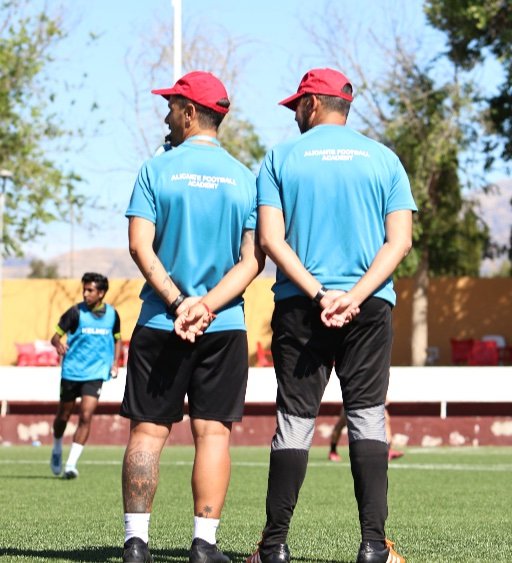
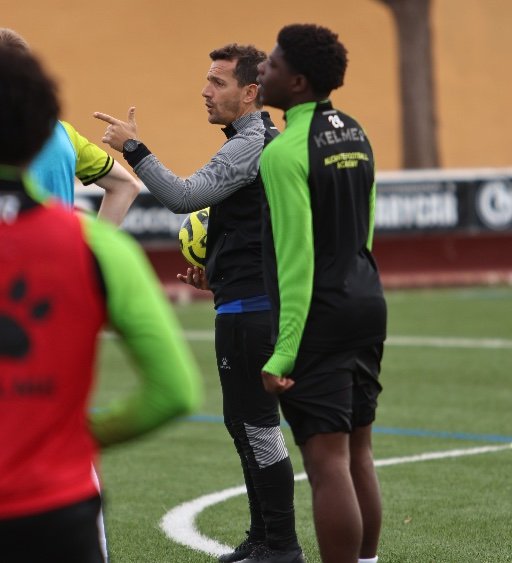
From our experience at Alicante Football Academy, your first talk with a coach can reveal a lot. A good youth coach will ask not just about your child’s skills, but also about their confidence, experience, attitude, availability, family support, and whether they really enjoy football. This is usually a much better sign than a club that only focuses on winning games.
What Age Can You Join Football?
Children can start football at different ages depending on the club, country, programme and football format.
Young children often start with football classes that focus on movement and fun instead of competition. These sessions help kids practice running, balance, coordination, dribbling, listening, sharing, and simply enjoying the game. At this stage, football should feel playful, not stressful.
As kids grow, many join age-group teams where they train regularly and might begin playing small-sided matches. The age when this happens depends on the local club and how its youth program is set up.
Older children can still start playing football, even if they didn’t begin when they were very young. A motivated 10, 12, or 14-year-old can improve quickly with the right group, a good coach, and regular practice.
Age groups help make football safe, fair, and right for each stage of development. Younger kids usually play in smaller formats, which gives them more chances to touch the ball, make decisions, and stay involved. As they get older, the game becomes more structured and similar to the full version.
READY FOR A STRUCTURED FOOTBALL PATHWAY?
If your child is already serious about football and wants a professional environment from age 16, our academy gives them daily training, clear feedback and exposure to Spanish clubs. Send us their details and we’ll explain the next step.
Apply to join
What Are The Benefits Of Joining A Kids’ Football Team?
Football helps children grow in many ways, not just by teaching them technical skills. Being part of a good team can improve their fitness, coordination, discipline, teamwork, and self-confidence.
The National Health Service (NHS) suggests that children and teens aged 5 to 18 should get at least 60 minutes of moderate or vigorous physical activity each day. Football is a great way to meet this goal because it includes running, changing direction, jumping, balancing, building strength, and improving coordination.
But football offers more than just physical benefits.
A positive football team environment helps children grow in many different ways:
- Physical development includes fitness, balance, speed, coordination, and a wide range of movement skills.
- Social development means making friends, talking with teammates, and learning how to work together in a group.
- Emotional development covers handling both success and failure, staying calm after mistakes, and becoming more resilient.
- Personal development involves learning discipline, responsibility, being on time, and following coaching instructions.
- Children become more confident when they ask for the ball, try new things, and feel more at ease with their teammates.
Research backs up these points. A systematic review listed in PubMed found that playing sports helps children and teens build self-esteem, improve social skills, and feel less depressed. The review also noted that team sports might offer extra benefits because they are social by nature.
This kind of growth is often seen in football. For example, a shy player might be quiet at first, but after a few weeks of passing drills, team warm-ups, and small games, they usually start asking for the ball, talking with teammates, and showing more confidence.
That’s why the team environment matters so much. A good football team helps children grow as athletes and also builds their confidence, sense of responsibility, and resilience.
How Do You Know What Type Of Club Is Right For You?
Not every football club has the same purpose, intensity or environment.
Some clubs are all about having fun, making friends, and getting everyone involved. Others put more emphasis on competition, skill development, and helping players move up to higher levels. There is no single best option. The right club depends on what suits your child.
If your child is just starting out and still learning the basics, a patient grassroots club, football school, or weekly training program might be best. If your child is already confident and trains seriously, they might benefit from joining a stronger team, a development center, or an academy pathway.
Families should choose based on:
- The child’s current ability
- The child’s personality
- The child’s football goals
- How much pressure they enjoy
- The distance to training
- The weekly schedule around school
- The training and match costs
- The coach’s communication and feedback
- Whether the environment feels safe and supportive
The best club is not always the one with the biggest name or the most competitive team. It’s the place where your child feels safe, motivated, supported, and looks forward to coming back each week.
COMPARE THE REAL COST BEFORE YOU COMMIT
Joining a football pathway should make sense for the whole family. Check programme lengths, what is included, accommodation, meals, training and support before choosing the right option.
View academy pricing
How Can You Make The Right Decision For Your Family?
Families should think about travel time, cost, coaching quality, match schedule, and how much their child wants to go.
A club with a strong reputation might look attractive, but it is not always the best choice for every child. Just because a club is well-known does not mean it will suit your son or daughter. If training is far away, costs are high, the schedule is too busy, or your child stops enjoying it, it can be difficult to continue.
Before registering, parents should ask:
- How many training sessions are there each week?
- What days and times are the sessions?
- How many matches will my child play?
- Will my child get fair game time?
- What is the coaching style?
- How are parents contacted?
- What happens if my child is new, nervous or less experienced?
- What are the full costs for kit, registration, travel and tournaments?
- Who is responsible for safeguarding and player welfare?
A good club will be glad to answer these questions. Parents should feel comfortable asking. These details matter because football should fit into your family’s daily life.
The best football journey is not only about joining the strongest team. It is about finding a club where your child can train often, enjoy playing, feel supported, and keep improving over time.
What Is A Player Pathway?
A player pathway is the journey a child takes as they grow in football. It might begin with beginner classes, school teams, or grassroots clubs, and later lead to local leagues, development centers, private coaching, academy trials, residential academies, or elite programs.
Every child’s pathway is different. Some players are noticed early, while others develop later. Some children need more time to build confidence before playing competitive matches. Others may need a stronger training environment because their local level is no longer challenging enough.
The right pathway helps children make steady progress. Kids shouldn’t be pushed too fast just because someone their age is already at a higher level. Developing in football takes time, and the best path is the one that lets each child improve step by step while still having fun.
How Can Your Child Join An Academy?
There are several ways for children to join an academy. They might be scouted, attend trials, get recommended, take part in development programs, or apply on their own. Each academy has its own process.
Academy football is usually more selective than grassroots football. Coaches look at technical skills, how fast a player learns, tactical understanding, physical ability, attitude, and how well the player works with teammates.
Not every talented child will get accepted, but that does not mean they have failed. Academy selection is competitive, and timing matters. Some players might not be ready at 10 but can make big improvements by 14 or 15.
At Alicante Football Academy, our program is designed for older players who are ready for a serious environment. Players can join from age 16, train with UEFA Pro licensed coaches, and if they meet the required level, train with real Spanish clubs as part of their football trial experience.
That’s why we encourage families to focus on taking the next right step, instead of only aiming for the biggest one.
What best describes your child’s current football situation?
What matters most for the next step?
Solution:
Start with a local grassroots club, school team, beginner football class, or weekly training programme. This is the best route if your child needs confidence, friends, ball touches, and a positive first experience before worrying about trials or academy selection.
Solution:
Look for a development centre, football school, or academy-style programme that welcomes improving players. Choose an environment that still protects enjoyment but gives your child better coaching, regular feedback, and a gradual step up in training level.
What matters most for the next step?
Solution:
Choose a strong local club where your child can train consistently, play matches, receive fair game time, and keep improving without too much pressure. This is often better than rushing into an academy too early.
Solution:
Consider academy trials, scouting events, or a structured residential academy route. For older players from age 16, Alicante Football Academy can be a good fit if they are ready for daily training, UEFA Pro-level coaching, and exposure to Spanish clubs.
What Does Joining An Academy Involve As A Kid?
Joining an academy usually involves more training, stronger competition and higher expectations than a normal grassroots team.
Players in academies usually need to attend more sessions, be on time, behave well, listen closely, and take their development seriously. The level is often higher, since they train with motivated teammates and may face stronger teams or play in tougher matches.
Families should know that joining an academy is a big commitment. It might mean more travel, extra training days, additional matches, meetings with coaches, and better planning around school and family schedules.
But it’s important that children still enjoy playing and feel supported. Playing football seriously shouldn’t mean feeling pressured all the time. A good academy helps players get better, build good habits, get clear feedback, and stay motivated to learn.
What Mindset Helps Young Players Improve Faster?
Talent matters, but in the long run, attitude, consistency, and being open to coaching are usually even more important.
Young players improve faster when they:
- Listen carefully
- Train even when they are not in the mood
- Try again after mistakes
- Help teammates
- Ask for feedback
- Stay humble after good games
- Stay calm after bad games
Parents can support their kids by praising effort, commitment, and learning, not just goals, trophies, or making the team. When children only feel valued for winning, they may start to fear failure.
At our academy, we often notice that the player who asks, “What can I do better?” usually grows faster than the one who only looks for praise.
A single great performance can get you noticed, but real improvement comes from building good habits week after week. For young players, effort, teamwork, resilience, and a willingness to learn usually make the biggest difference over time.

Why Does Consistency Over One-Off Brilliance Matter?
Coaches value players who perform steadily over time. Having a great game helps, but working hard in training every day matters even more.
Coaches notice players who keep trying when they are tired, stay focused each week, and make good decisions even when things are difficult.
Being consistent shows that a player is disciplined, focused, mature, and willing to improve. It tells coaches that the player is not just talented sometimes, but is committed to getting better every week.
Kids can become more consistent by building small habits, like showing up on time, practicing their first touch, using both feet, listening to feedback, and thinking about what went well after training. Doing these simple things regularly often matters more than just having one great game.
Why Does Character Matter More Than You’d Think?
Coaches notice how players act on and off the field. They look at how someone responds after losing the ball, if the child respects teammates, listens or argues, and whether they help the team or only think about themselves.
Players who deal with mistakes in a positive way are usually easier to coach. When a child loses the ball but keeps trying, talks with teammates, and doesn’t give up, coaches see their resilience. This matters because football is full of pressure, setbacks, and hard decisions.
Traits like humility, hard work, and good communication also affect who gets picked for the team. A talented player with a bad attitude might get early chances, but a hardworking, supportive, and humble player often catches up over time.
Strong character can’t take the place of talent, but it helps young players handle pressure, learn from feedback, and keep getting better as football becomes more challenging.
Why Isn’t Physical Development Optional?
Football calls for fitness, balance, speed, strength, and coordination that match a child’s age. Young children should not train the same way as adults. Their physical development needs to be safe, gradual, and right for their age.
Younger players should spend more time building movement skills instead of doing heavy strength training. At this age, running, jumping, landing, turning, balance, and coordination matter more than lifting heavy weights.
Sleep, good nutrition, and recovery are important too. If a child trains hard but does not sleep well, eat right, or recover enough, it will be hard for them to perform well over time.
NOT SURE IF ACADEMY OR CLUB FOOTBALL FITS BEST?
A local team is right for many young players, while an academy suits players ready for more structure, commitment and feedback. This guide breaks down how academy routes usually work.
Read the academy guide
Should You Consider One-to-One Coaching?
One to one coaching can help children pick up certain skills faster.
It is especially useful for:
- Confidence
- Weak-foot work
- Shooting
- Passing technique
- Ball control
- Defending details
- Position specific habits.
Still, private coaching should support team football, not replace it. Football is about making decisions, moving, and working with teammates and opponents. Children need team training to learn how to communicate, find their position, and get used to how a match flows.
Parents should choose coaches who are qualified, positive, and experienced with children.
What Football Formats Might Kids Play?
When children are younger, they start with smaller formats and move to 11-a-side games as they grow older.
Playing in smaller formats lets children touch the ball more often, make decisions, and stay involved in the game. This supports their development because they are not faced with a full-size pitch too early.
The IFAB says national football associations can modify certain organizational rules for youth, disability and grassroots football, including field size, ball size, match duration and number of players.
For example, here is how England Football organizes youth club formats:
| Age group | Common format | What it helps develop | Parent note |
|---|---|---|---|
| U7–U8 | 5v5 | Ball touches, confidence, basic movement | Focus should be fun and friendship |
| U9–U10 | 7v7 | Passing, dribbling, simple teamwork | Children start understanding space better |
| U11–U12 | 9v9 | Team shape, gameplay, responsibility | A good stage before full 11v11 football |
| U13–U14 | 11v11 | Tactical roles, decision-making, match structure | Players begin learning full-game responsibilities |
| U15–U16 | 11v11 | Match intensity, tactics, physical development | Commitment and consistency become more important |
LOOKING FOR A GIRLS’ FOOTBALL PATHWAY?
Girls can start through fun local sessions, mixed teams or girls-only football. For older players ready for a full academy environment, our women’s programme in Spain explains what structured training can look like.
Explore the girls’ academy
What Girls’ Football Programmes and Inclusive Opportunities Are Available?
Girls have more opportunities than ever to get involved in football. Depending on what is available in your area, you can join mixed teams, girls-only sessions, school teams, local clubs, development programs, or national sessions.
If you are new to football, England Football’s Wildcats program is for girls aged 5 to 11 who want to try the sport in a fun and relaxed way. For girls aged 11 to 16, Squad Girls’ Football helps you build confidence, learn new skills, and join in at your own pace.
Having inclusive options matters too. England Football’s Comets program welcomes disabled boys and girls aged 5 to 11, creating a playful and friendly football environment where making friends and having fun are the main goals.
In Spain, the RFEF has introduced more ways for girls to start playing football. The Playmakers program, run with UEFA and Disney, helps girls aged 5 to 8 get involved through fun activities and making friends. The “Ellas Juegan” campaign supports girls aged 6 to 10, especially in areas where it is harder to set up girls’ football teams.
If you want a more competitive experience, the RFEF offers several women’s competitions in Spain. These include the Primera División Femenina, Primera Federación FUTFEM, Segunda Federación FUTFEM, Tercera Federación FUTFEM, Copa de la Reina, Supercopa, and Torneo Juvenil Femenino.
Older girls who want a more serious football experience can join the girls’ football academy at Alicante Football Academy in Spain. The women’s program has UEFA Pro-licensed coaches, training in the Spanish women’s football style, adapted accommodation, and the chance to train with Spanish women’s clubs if you meet the required level. Players can join from age 16.
The most important thing is for girls to find a place where they feel confident, safe, and respected. Great girls’ football is not just about having somewhere to play; it is also about giving players good coaching, high standards, and belief in themselves.