
Key Takeaways
- A free kick restarts play and gives a team the first touch after an infringement such as a foul, unsportsmanlike conduct, or a technical error.
- The main difference lies between direct and indirect free kicks. A direct free kick allows a goal to be scored immediately. An indirect free kick requires the ball to touch another player for the goal to be valid.
- The details matter. The ball must be stationary, defenders must stay 9.15 meters away, and the referee gives the signal. There are quick, ceremonial free throws, and the offside rules still apply after the throw.
Table of Contents
What Is A Free Kick In Football?
A free kick lets your team restart play after the other team breaks the rules. Your team gets the ball, and the other players must stay a set distance away, so you can restart without pressure, as the Laws require. Free kicks matter because they can change what happens next in a match. They help you keep possession, run a planned play, or create a scoring chance. Many people think free kicks are just for shooting, but in real games, they are just as often used to slow things down after a foul, get out of trouble in your own half, or start an attack with a pass or cross, which still makes them a key game-management tool in 2026 rather than just a highlight moment. Unlike throw-ins, corners, goal kicks, or kick-offs, a free kick is awarded for a rule violation and gives your team protected space to restart. Most people around the world call the sport football, but in the US, it’s usually called soccer because “football” often refers to the NFL, which has its own version of a “free kick.” In this article, “football” means association football, following the IFAB Laws of the Game.
How Do Free Kicks Work In Football?
A free kick can look simple, but the details matter. Here’s how we help players master it, one step at a time:
- First, the referee stops the game and awards a free kick to the team that was fouled.
- The free kick usually happens where the foul took place, unless the rules require a different location.
- Check that the ball isn’t moving before you take the kick.
- Opponents must step back at least 9.15 meters, or 10 yards, unless they’re on their own goal line between the posts.
- If the defending team forms a wall of three or more players, attackers have to stay at least one meter away from it until the ball is kicked.
- The game starts again as soon as the ball is kicked and moves.
- The player taking the free kick can’t touch the ball again until someone else does. If they do, the other team gets an indirect free kick from that spot. Other penalties may apply depending on what happened.
Paying attention to the referee’s signals and where everyone is standing can make a big difference.
A common mistake is not watching the referee’s signal or missing what kind of restart it is.
- For an indirect free kick, the referee raises an arm to show that a goal only counts if another player touches the ball first.
- For a direct free kick, the referee usually keeps their arms down, unless they need to signal something else.
- If the referee sets up the wall or marks the spot, it’s a ceremonial free kick and you must wait for the whistle. The referee will measure the distance, sometimes with spray, set the wall, and then blow the whistle to restart.
Our simple rule for players is to always check the referee’s arm before looking at the wall.
READY TO TURN SET PIECES INTO A WEAPON?
Free kicks are one of the fastest ways to influence a match—if you train them with structure. We build repeatable set-piece routines, decision-making, and technique so players stop relying on luck and start creating chances on demand.
Join The Academy
What Warrants A Free Kick Under Law 12 Fouls And Misconduct?
Most free kicks are awarded for offences described in Law 12, which covers fouls and misconduct. Law 13 explains how to take free kicks. Understanding the difference helps players know why a free kick was given and how to restart play the right way.
A direct free kick is given for fouls that involve contact and for some non-contact offences like handball. Examples include kicking or trying to kick, tripping or trying to trip, pushing, charging, striking or trying to strike with contact, holding, and handball outside the area where the goalkeeper can use their hands.
An indirect free kick is given for offences like playing dangerously without contact, blocking an opponent without contact, using offensive language or showing dissent, stopping the goalkeeper from releasing the ball, and certain handling violations by the goalkeeper inside the penalty area.
Even if the restart is the same, the punishment depends on how serious the foul is. Careless fouls usually do not get a card, reckless fouls get a yellow card, and using too much force leads to a red card. This is why two tackles that look similar can have very different outcomes.
How Did Free Kicks Originate In Football History?
Free kicks have been around in football for many years, but they used to be different from what we see now. In the early FA laws from 1863, a free kick was awarded after a “fair catch.” The player would mark the spot, and opponents had to stay back while the kicker stepped away to prepare for the kick.
When football switched from different regional rules to one standard set, the free kick became a way to punish fouls, keep the game fair, and restart play in an orderly way.
Today, free kicks are part of a clear and enforced system. Law 12 lists many offences, and Law 13 explains how the kick is taken, the required distances, and what happens if players interfere. There are also cautions for anyone who tries to delay or stop a quick restart.
What Are The Types Of Free Kicks In Football?
There are two main types of free kicks in football:
- Direct free kick
- Indirect free kick
They exist because not every offence deserves the same level of punishment.
Some actions give a clear unfair advantage, such as holding, tripping, or handball. These can result in a free kick that allows a team to score directly.
Other offences are considered “technical” or non-contact, like dangerous play, dissent, or some goalkeeper restrictions. For these, the ball must touch another player before a goal can be scored.
| Feature | Direct Free Kick | Indirect Free Kick |
|---|---|---|
| Can you score directly? | Yes (ball can go straight in) | No (must touch another player first) |
| Referee signal | No arm signal in most cases | Arm raised until kick taken and/or touched |
| Typical offences | Contact fouls, holding, handball, impeding without contact, dissent, some GK offences | Dangerous play, obstruction, offside, goalkeeper technical offences |
| Best tactical use | Shots, whipped crosses, disguised passes | Designed routines: layoff + shot, chipped pass, crowded-box plays |
| Common mistake | Shooting from too far instead of building play | Forgetting the second touch, “scoring” but it doesn’t count |
WANT A SIMPLE WAY TO PRACTICE FREE KICKS THIS WEEK?
Most players take 20 random free kicks and call it training. We prefer short, focused blocks: technique first, then decision-making, then pressure. If you want a structured approach, we can point you to our training resources and set-piece habits we use with academy players.
Read Our Guides
Direct Free Kick
A direct free kick gives a player the chance to score with a single kick, without anyone else touching the ball first. This is the kind of free kick people mean when they say things like, “It’s in shooting range,” “Put it on target,” or “Whip it across the keeper.” Referees award a direct free kick for contact fouls such as pushing, tripping, holding, or charging, and also for some offences like handball.
This is why free kicks are often compared to penalties. If the defending team commits the same type of foul inside their own penalty area, play restarts with a penalty kick instead of a free kick.
Indirect Free Kick
For an indirect free kick, the ball must touch another player before a goal can be scored. That second touch could be a teammate’s tap, a deflection, a header, or even a defender’s touch. If there is no second touch, the goal will not count.
Indirect free kicks are usually given for non-contact infringements such as playing dangerously or impeding an opponent without contact. They can also result from technical offences, like some goalkeeper handling rules, or from misconduct such as dissent.
You can tell a kick is indirect when the referee raises an arm. This signal means a second touch is needed before a goal can be scored.
What Is The Difference Between Direct And Indirect Free Kicks?
The key difference is how you score and what your goal is. With a direct free kick, you can score right away with one touch. For an indirect free kick, you need to create a chance because the ball has to touch another player before a goal counts.
The simplest way to tell the difference is to watch the referee. For an indirect free kick, the referee raises an arm to show that another player must touch the ball before a goal can be scored. For a direct free kick, the referee keeps their arms down.
Coaches approach these situations in different ways. Direct free kicks are about handling pressure, like getting past the wall and the goalkeeper. Indirect free kicks rely more on teamwork and timing, such as moving into position and making sure another player touches the ball. If you train both the same way, you won’t get really good at either one.
What kind of free kick has the referee awarded?
What is the best opportunity you see right now?
Solution:
Go for goal directly. Use your most repeatable technique, make sure the ball is still, check the wall distance, and focus on clean contact and placement rather than just power.
Solution:
Treat it like a planned set piece. Use a whipped cross, disguised pass, or quick combination to attack the space before the defense settles and turn the restart into a higher-quality chance.
What is the best opportunity you see right now?
Solution:
Do not shoot straight from the first touch. Use a layoff or short touch first, then have a second player strike on goal so the finish counts under the indirect free kick rule.
Solution:
Use a routine built around timing and movement. Play a short pass or chipped ball into the best area, make sure there is a clear second touch, and check offside positions before the restart.
What Are Common Scenarios For Awarding Free Kicks In Matches?
Free kicks usually happen in specific parts of the field. In the defensive third, teams use them to ease pressure and get organized again. In the middle third, they often break up transitions, slow down the game, or come from tactical fouls. Out wide and in attacking half-spaces, free kicks create chances for crosses and set plays. Close to the box, they become real scoring opportunities, with the wall and goalkeeper trying to stop the shot.
Referees award free kicks for obvious fouls like contact, holding, or tripping, and also for technical offenses or misconduct such as dangerous play, blocking without contact, or dissent. If the team that was fouled has a good chance to keep playing, the referee may let play go on. If nothing comes from that advantage, the referee can stop the game and give the free kick afterward.
This is important to understand. Many players think that if the referee doesn’t blow the whistle, there was no foul. But sometimes, referees let play continue because of the advantage rule. Players should notice this and stay calm. If you have the advantage, keep playing. If it doesn’t work out, be ready to restart with a free kick.
What Is A Quick Free Kick And When Is It Allowed?
A quick free kick lets you restart play immediately, without waiting for the referee to arrange the wall. You can take it if the ball is in the right place, isn’t moving, and the referee hasn’t called for a ceremonial restart. The main advantage is surprising your opponents. The downside is you might kick into a crowded area or miss a better set-piece chance.
A lot of players forget this rule: if an opponent is close by and you take the quick kick, and it hits them or they intercept it, the referee can let play continue. But if the opponent clearly tries to block the quick kick, they can get a yellow card for delaying the restart.
Our advice is simple: take the quick kick if you see open space. If you want your team to be more organized, wait for the ceremonial restart.
What Infringements And Sanctions Apply To Free Kicks?
When a free kick is awarded, some important rules apply immediately, and most problems happen in those first few seconds. Common issues include defenders standing too close, attackers getting too close to the wall (they must stay 1 meter away if there are three or more defenders), the ball not remaining still, and the kicker touching the ball twice.
The first steps are simple. Defenders need to move back and not interfere. Attackers should place the ball, check their options, and decide if they want to take a quick kick or wait to organize. If a wall is forming, attackers should step away early to follow the 1 meter rule.
According to the Laws, the result is either a retake or a disciplinary action. If opponents are too close and interfere, the kick is usually retaken, and if they deliberately prevent play, they can be cautioned. If the ball is not still, the kick is retaken. If the kicker touches the ball twice, the other team gets an indirect free kick.
What Is The Difference Between A Free Kick And A Penalty Kick?
A penalty kick is basically a direct free kick that takes place inside the defending team’s penalty area. This can be confusing, and players often ask, “It’s the same foul, why isn’t it a free kick?” The answer is that the rules change depending on where the foul happens. If it’s outside the box, it’s a direct free kick. If it’s inside, it turns into a penalty kick.
Where the foul happens affects how play restarts, but the seriousness of the foul is also important. A careless foul might just result in a penalty, while a reckless challenge could earn a yellow card. If a player uses too much force, it can lead to a red card, even though the game still restarts with a penalty.
What Techniques Are Used For Taking Free Kicks?
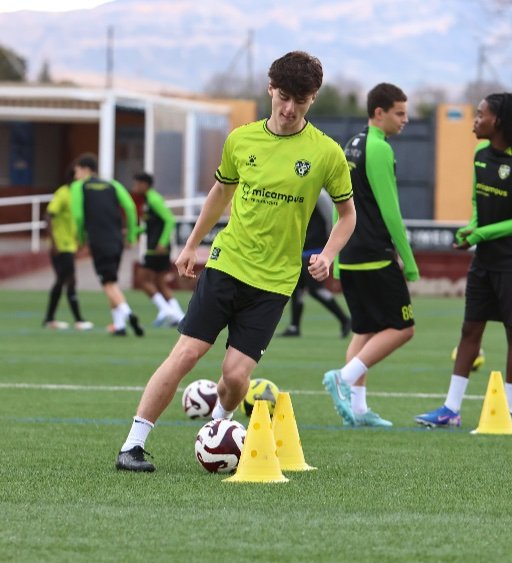
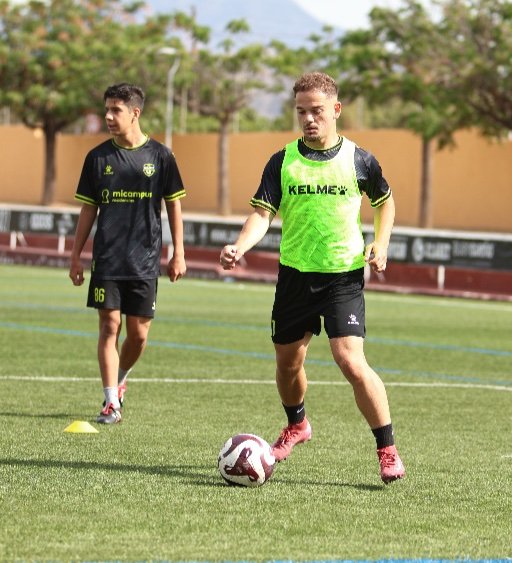
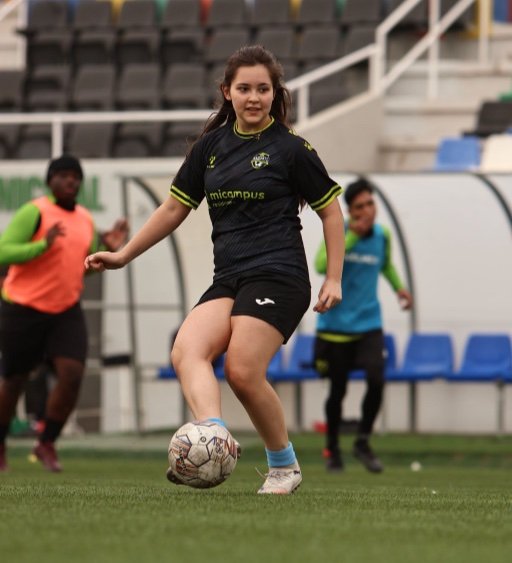
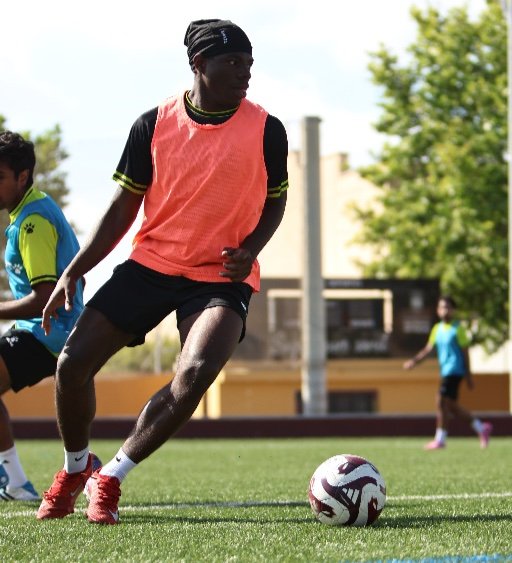
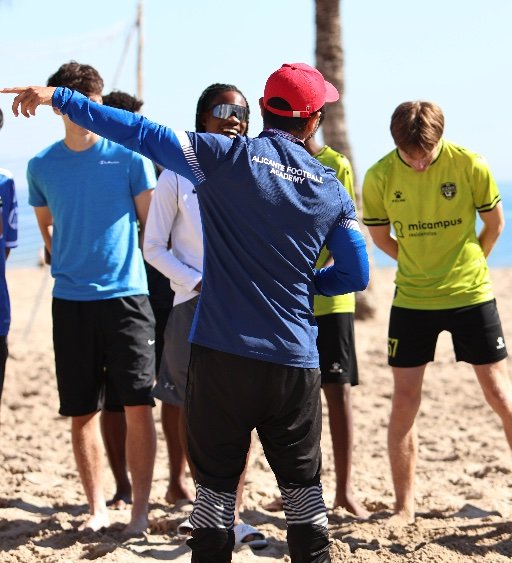
Good technique stands out, but your decisions on the field matter most. At Alicante Football Academy, we keep free kick training straightforward. Decide on your goal, choose your contact, set your routine, and practice under pressure.
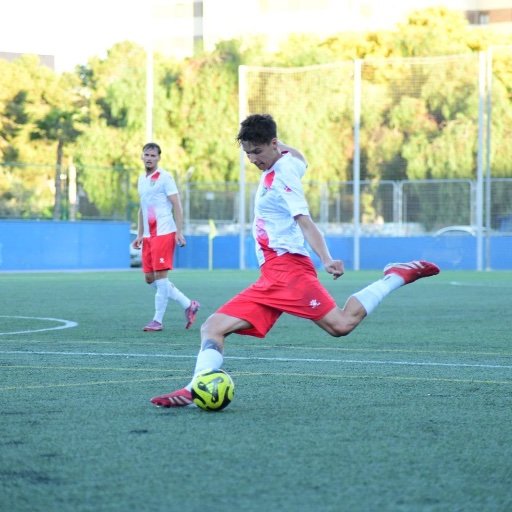
We focus on three main ways to strike the ball. The inside-foot curl gives you accuracy and helps bend the ball around the wall. The laces or knuckle shot adds power and makes the ball move unpredictably. The driven pass or whipped cross delivers speed into target areas. What matters most is not having one perfect technique, but being able to repeat your contact consistently.
When we train curve, power, and placement, we pay attention to the details that really affect your shot. Ball position is important: place it a bit forward for knuckle shots and a bit outside for curls. Your approach angle, whether straight or diagonal, changes the spin. Your hip line and plant foot control the direction, and your follow-through affects the height and dip. Players who can place the ball accurately every time will always do better than those who only hit it hard now and then.
Free kicks are most effective when players specialize. Not everyone needs to take every free kick. We assign roles: one player takes consistent curls, another handles knuckle balls, and someone else focuses on delivering the ball. We pick the taker based on the distance, angle, and the goal we want to reach.
Practiced routines make free kicks harder to defend. Most goals are not “Messi moments”; they come from patterns. We practice options like laying off and shooting, using a dummy runner to create space, overloading the far post for rebounds, and taking a short free kick to change the angle before crossing.
It is not only about attacking. In defensive areas, the goal is often to relieve pressure and keep control. This could mean making a clean first pass out, clearing the ball into a target area, or setting up so you can push your line forward and regain your shape.
WANT COACHES TO FIX YOUR FREE KICK TECHNIQUE IN ONE WEEK?
Free kicks improve fast when someone watches the details: approach, plant foot, body shape, and the first touch after the restart. If you want structured training in Spain, we can show you how we build set pieces inside real academy sessions.
Apply To Train With Us In Alicante
Can You Score A Goal Directly From A Free Kick?
Yes, a direct free kick can go straight into the goal and count, as long as it follows the restart rules. For an indirect free kick, the goal only counts if the ball touches another player first. That’s why teams often use a quick pass and shot for indirect free kicks.
Remember those classic free-kick moments? A direct free kick usually means curling the ball over the wall into the top corner. An indirect free kick is more about a short pass and a quick shot or a planned touch-and-go. Each type has its own rules and purpose.
There’s another rule that surprises a lot of players. If a free kick goes straight into the kicker’s own goal, it doesn’t count. Instead, the other team gets a corner kick. This is rare, but it’s why we tell players to take defensive free kicks carefully and not rush.
How Has Modern Technology Changed Free Kicks?
In modern football, new tools have changed the way referees manage and judge free kicks.
VAR does not review every situation involving free kicks or penalties. IFAB rules say it can only be used for a “clear and obvious error” or a serious missed incident in four cases: goal or no goal, penalty or no penalty, direct red cards, and mistaken identity. Free kicks matter because a foul before a goal, or whether an offence happened inside or outside the penalty area, can affect the result.
At higher levels, referees sometimes use vanishing spray to mark where the ball should be placed and how far the wall must stand. Research shows the spray did not reduce how often players broke the distance rule, but it did stop them from moving as far forward. It also did not have much effect on how often free kicks were successful.
Referees also use communication equipment such as headsets and buzzer or beep flags to work with assistants, the fourth official, and video officials. These tools help them manage restarts, walls, and reviews more consistently.