

Key Takeaways
- There is no fixed maximum age, because the word “academy” can mean different things and lead to different outcomes.
- In professional clubs, players are grouped by age, so it gets harder to join later because teams fill up.
- After 18, it’s better to focus less on joining an academy club and more on moving forward in senior football. Get playing time, perform well, and look for ways to get noticed.
- If you develop later than others, you still have a chance. You just need structure, honest feedback, and regular competitive games.
- No academy can guarantee a professional contract. What we can do is help you make smart choices and use your time well.
Table of Contents
Maximum Age To Join Football Academy
Not all academies have the same upper age limit. The maximum age depends on the academy and what you want to achieve.
Professional club academies work with different youth age groups. In England, players are grouped from Under 9 to Under 21. They move through the Foundation Phase (U9 to U11), Youth Development Phase (U12 to U16), and Professional Development Phase (U17 to U23).
Since the academy system is organized by age, joining at an older age gives clubs less time to help you develop. This means they pay more attention to your current performance.
Academies also have limits on how many players they can accept. For example, the EFL Youth Development Rules set a maximum of 30 players in U9 to U14 and 20 players in U15 to U16 for each age group.
If you are told “no,” it does not always mean you are not good enough. Sometimes, it simply means the group already has enough players.
Some players develop later than others. From our experience, players who were not chosen at 14 or 15 can improve quickly as their body and mindset grow. Research from an English professional academy also shows that selection often depends on a player’s age and physical maturity, especially between U9 and U16.
Can I Join Football Academy At 15 Or 16?
You can still join at 16, but clubs expect more because they are getting players ready for U18 and senior teams.
At ages 15 and 16, scouts and coaches focus less on flashy skills and more on these qualities:
- How well you control the ball when under pressure
- How quickly you make decisions on the field
- How much effort you put in when you don’t have the ball
- How well you listen to feedback and apply it
- How consistently you perform in every match
If you’re not playing in competitive matches regularly, make that your first step. Only training won’t help you get noticed.
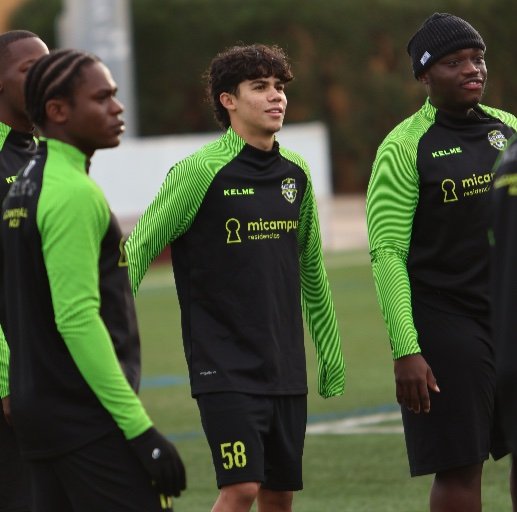
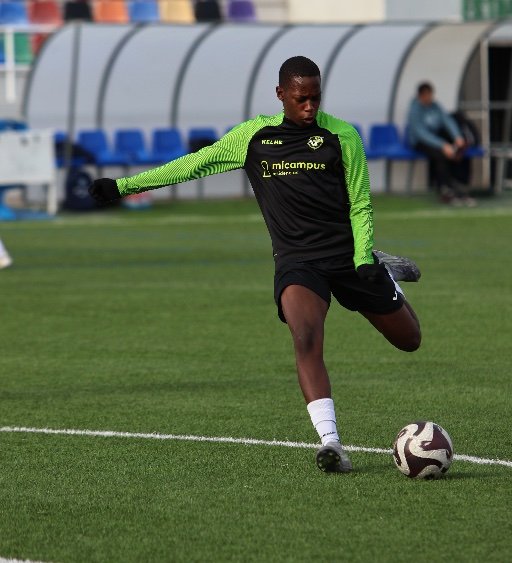
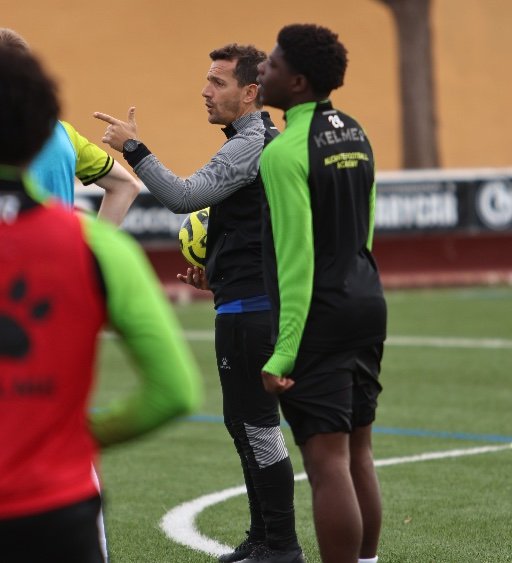
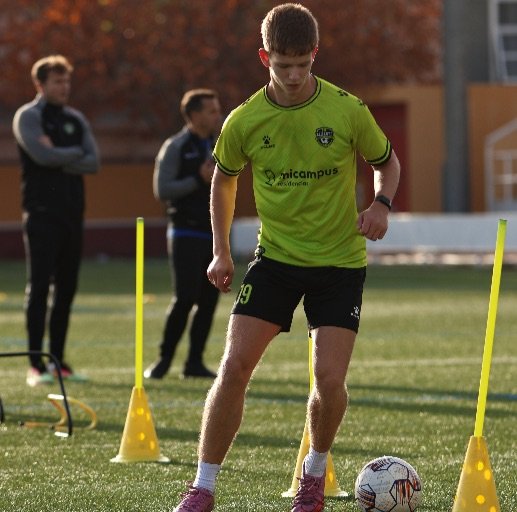
If you’re 16 and upwards, looking for a full-time football experience outside a club academy, private or residential academies are a good choice. At Alicante Football Academy, our program is for players aged 16 to 23.
READY TO FIND OUT IF YOUR AGE FITS OUR PROGRAMME?
Apply with your age, position and current level and we’ll tell you what’s realistic and what your next step should be.
Can I Join Football Academy At 18?
Yes, but at this point, the focus shifts from joining a youth academy to finding the best way into senior football.
By age 18, most professional academies have already filled their U18 teams, so joining usually happens in one of these ways:
- Trying out later for a development or reserve team
- Signing with a semi-pro club to get playing time
- Joining a structured academy program like Alicante Football Academy, that helps you get noticed and offers match footage also opens up more international opportunities.
From our experience, when an 18-year-old joins us, talent isn’t the only thing that matters most.
What matters is whether they already have the habits needed to live like a footballer:
- Arriving in good shape so coaches can assess you properly
- Recovering well by focusing on sleep, nutrition, and mobility
- Giving your best effort in every session, not only when you feel your best
If you want to see if our programs fit your age and check out our facilities, just register online. We’ll guide you through the process based on your profile.
Can I Join Football Academy At 20?
Yes, but at 20, you should look for places where you can play in matches every week, not just focus on training.
Most professional club academies rarely take on 20-year-olds unless you’re already performing well with a senior team. Here are some options that might work better:
- Try joining a semi-pro or senior team to start building your experience.
- Go to specific trials and showcases, but make sure you’re ready before you do.
- Consider residential academies that offer regular matches, video analysis, and honest feedback.
From what we’ve seen, 20-year-olds who improve the most treat football like a job. They show up in shape, compete every day, and start working on their weaknesses right away.
LEARN HOW CLUB ACADEMIES ACTUALLY RECRUIT
Scouting, trials, age groups, and why many talented players get overlooked. Use this guide before you start messaging clubs.
Read the academy entry guide
Can I Join Football Academy At 23?
Yes, but it depends on what you mean by “academy” and what your goals are.
In football, age 23 is usually considered the end of the “training years” for development rewards. According to FIFA, training and education mostly take place between ages 12 and 23.
UEFA’s training compensation rules follow the same idea. The training period for compensation is from age 12 to 23.
This does not mean you cannot improve after 23. It simply means the focus moves to senior-level performance.
At Alicante Football Academy, the maximum age is 23. Our program helps players move into senior opportunities while still giving them time to develop.
Can I Join Football Academy At 25 In England?
If you’re 25 and not in a professional club’s academy, you can still play competitive football in England by joining non-league or semi-pro teams.
Football academies in England are mainly for young players, usually from under-9 to under-21. At 25, you may be wondering where you can play and continue to develop.
One reason academies recruit young and local players is because of regulations. For example, EFL youth rules limit travel time to development centres to one hour for under-11s and 1.5 hours for under-12s to under-16s.
At 25, it’s best to focus on building your career as a senior player rather than trying to join an academy.
- Play as often as you can at the highest level available to you.
- Try to record your full matches, not just the highlights.
- Pick your trials carefully and make sure you are well prepared for each one.
- Consider playing abroad if the level is right for you and your situation allows it.

What Age Can You Join Top Club Academies?
Top club academies are always looking for young players. They usually find talent through scouting and invitations, not by accepting open applications.
In England, the academy system starts at Under 9, called the Foundation Phase (U9–U11). Many top players join early so clubs have more time to help them grow.
We always tell families to be careful. Some programs use well-known club names, but this does not mean players are registered in a real professional club academy. Here are some questions to ask:
- Are the players officially registered in the club’s academy system?
- Who do the teams compete against?
- What happens when the program finishes?
What Age Can You Join Chelsea Academy?
Most recruitment happens in the younger age groups and later entry is selective, usually through scouting or invitation-only trials.
What Age Can You Join Liverpool Academy?
Similar reality: early recruitment is common, and late entry tends to happen only if a player is already performing strongly in competitive matches.
What Age Does Tottenham Academy Start?
The academy pathway starts with the youngest age groups, and each year, decisions are made about which players stay and which move on.
What Factors Influence Whether Age Limits Apply?
Age limits are influenced by more than just talent. Systems and logistics also play a big role.
The main factors are:
- The type of academy matters, whether it is a club pathway or a private development program.
- Squad capacity is important because professional systems limit how many players can be in each age group.
- Physical development and selection bias also matter, since late developers can sometimes be missed.
- Location and travel are factors too, since rules may limit who can join certain programs.
- International eligibility is limited by FIFA rules, which do not allow minors to play in other countries but there are some exceptions.
This is why two players the same age can have completely different “age limit” outcomes.
SEE PROGRAMME OPTIONS AND PRICING
Short stays, camps and full-season programmes suit different players. Compare options and what’s included before you decide.
View pricing
How Can You Join A Football Academy Later In Life?
You can join later by finding the right environment for your age, showing your abilities, and making sure you are evaluated fairly.
Here are some steps to help you get started:
- Decide on your main goal, such as signing with a club, getting senior playing time, or focusing on your development and exposure.
- Make a clear player profile that includes your position, level, playing time, and full match videos.
- Work on your intensity by doing repeated sprints, building strength, and paying attention to recovery.
- Begin playing in competitive matches as soon as possible.
If you are between 16 and 23 and want a structured program in Spain, we offer daily training, matches, and honest feedback to help you track your progress.

How Do Football Trials Help Older Players Get Noticed?
Trials are successful when you help the coach make a clear decision. Show that you can play at the right level, fit in with the team’s style, and handle the environment.
From what we’ve seen, these are the quickest ways to stand out:
- Make quick and simple decisions, and try not to overcomplicate your play.
- Put in effort even when you don’t have the ball by pressing, covering, and tracking.
- Talk to your teammates and keep calm under pressure.
- Be open to feedback and make changes when the coach asks.
This is why we like to evaluate players over a full match.
Age bands and realistic next steps
| Age band | Most realistic pathway | What to focus on |
|---|---|---|
| 13–16 | Youth development pathway | Basics, speed of play, match learning |
| 16–18 | Late youth intake / scholarship stage | Consistency, physical readiness, coachability |
| 18–20 | Bridge to senior football | Performance output, recovery, tactical discipline |
| 20–23 | Senior pathway + development support | Immediate impact + professional habits |
| 23+ | Senior football only | Track record, reliability, leadership |