Key Takeaways
- The 4-2-3-1 formation depends on all four lines working as a unit. If one line fails, the team can lose control of the center.
- The double pivot is a partnership. One player should focus on defense, the other on linking play, and both must stay alert.
- The number 10’s main job is to link play. If they just wait for final passes, the team can become disconnected.
- When the team is out of possession, the shape often shifts to 4-4-1-1 or 4-4-2. This is normal as long as everyone stays compact.
Table of Contents
4-2-3-1 Formation
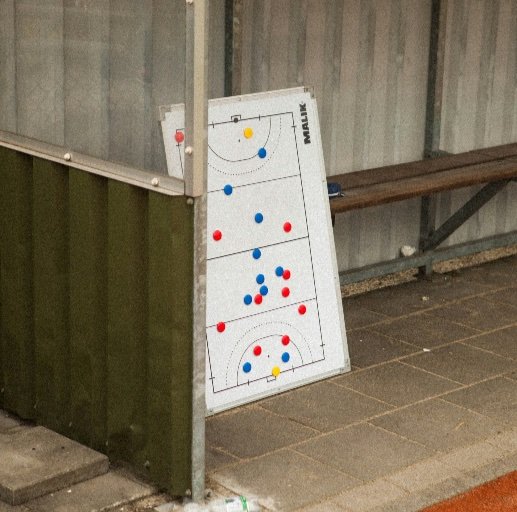
The 4-2-3-1 formation aims for balance. It uses a strong back four, two midfielders in front of them, and three attacking players supporting a striker.
The main goal for spacing is simple.
- Stay compact when you don’t have the ball.
- Create width and depth when you do.
- Make sure enough players stay behind the ball to stop counterattacks.
Let’s break down the formation by looking at key player partnerships:
- The centre-back and pivot work together to build up play and provide defensive cover. Number 10 connects the midfield and attack,
- The winger and full-back work together to provide width and help with pressing.
- The numbers 9 and 10 link up and make forward runs together.
When these partnerships work, the system feels easy. If they don’t, you often see problems like counters through the middle, a number 10 who can’t get involved, and long balls to an isolated number 9.
What Are The Different Name Variations Of The 4-2-3-1 Formation?
You may see the same formation labelled differently, since coaches often describe them depending on the phase of play.
Here are some common variations:
- 4-2-3-1 (the basic attacking picture)
- 4-4-1-1 (the wingers drop and the 10 supports the 9)
- 4-4-2 (the 10 steps up to press next to the striker)
- 4-5-1 (a defensive description in a deeper block)
Don’t worry too much about the names. Instead, pay attention to the key roles: who presses, who screens, and who makes runs beyond the ball.
READY TO PLAY IN A PRO SYSTEM?
If you want structured training, real matches and honest tactical feedback, apply and we’ll explain the process.
How Is The 4-2-3-1 Used In Soccer And Football Contexts?
“Football” and “soccer” mean the same sport, but the word people use depends on where they live. Most countries call it football, but in the USA and Canada, people say soccer because “football” can mean other sports there. Position names also change: in the UK and Europe, people say centre-back and full-back, while in the US, they use center back and outside back. When coaches talk about numbers like 6, 8, 10, or 9, they usually mean a player’s role, such as holding midfielder, box-to-box, playmaker, or striker, not the shirt number.
The 4-2-3-1 is common worldwide because it can fit possession, counter-attacking, or pressing styles. The base stays the same: two pivots protect the middle, and the front four create the goals.
What Are The Positions And Numbers In The 4-2-3-1 System?
A simple way to understand the system is through classic shirt numbers:
- 1: goalkeeper
- 2 and 3: full-backs
- 4 and 5: centre-backs
- 6 and 8: double pivot (roles can swap)
- 7 and 11: wide attacking midfielders
- 10: attacking midfielder
- 9: striker
Officially, football is played with a maximum of 11 players per team, including the goalkeeper, which is why the 4-2-3-1 formation adds up to 10 outfield players plus the keeper, as defined in the IFAB Laws of the Game.
CHECK PROGRAMME OPTIONS AND PRICING
Short stays, camps and longer programmes. Compare what’s included before you decide.
View pricing
What Are The Roles And Responsibilities In A 4-2-3-1?
The mistake we see most often is players paying attention only to their own role instead of helping the teammate beside them.
When we introduce the 4-2-3-1 to a new group, the pivot line is often the first problem. Both midfielders chase the same ball, which leaves the center open and makes it easy for opponents to counter through the middle. If you fix this, the rest of the formation works much better.
In a well-organized 4-2-3-1 formation, here’s what each group should do:
- The two holding midfielders stay close together and support each other.
- The number 10 helps move the ball forward.
- The wingers help out in both attack and defense.
- The full-backs pick the right times to push forward.
If you want to learn these principles properly, we go over them every week with training, match analysis, and feedback for each position. You can sign up and train with us at the Alicante Football Academy in a professional environment.
| Role | In possession | Out of possession | One coaching cue |
|---|---|---|---|
| Goalkeeper | safe outlet, play into free side | organise line, manage space behind | “play to the free man” |
| Centre-backs | split, step in if unpressed | defend box, hold line | “first touch forward” |
| Full-backs | provide width, overlap/underlap | defend wide channel | “arrive on the run” |
| Double pivot | protect + connect, support under ball | screen centre, win second balls | “scan before receiving” |
| Wingers (7/11) | stretch, then attack inside | drop to 4-4, press wide | “start wide to finish inside” |
| 10 | connect, receive between lines | press with 9 or screen pivot | “available first” |
| 9 | pin, link, run beyond | set pressing direction | “make runs for the team” |
How Does The 4-2-3-1 Work Tactically During A Match?
We coach the 4-2-3-1 through five clear moments of the game.
In the build-up, the centre-backs split to create width, one pivot shows to receive while the other balances behind the ball, and the number 10 positions himself in the space behind the opponent’s first line of pressure.
During progression, we look to create triangles between the full-back, pivot, and winger, use the 10 as a third-man option to break lines, and switch play through the double pivot when the opposition shifts across.
In the final third, one wide player stretches the pitch while the opposite winger attacks the box, the 10 arrives late for cut-backs around the penalty area, and the full-back overlaps when the winger moves inside.
In transitions, the first priority is to stop counter-attacks through the centre with good pivot protection. We apply a brief counter-press after losing the ball and, if ineffective, recover quickly into a compact defensive shape.

What Is The Game Style Of The 4-2-3-1 Formation?
When we use the 4-2-3-1 formation, we usually pick one of three main styles, depending on our plan. The first is a possession style, where the two holding midfielders help control the tempo and the full-backs give us width. The second is a mid-block, counter-attacking setup that shifts into a compact 4-4-1-1 to defend the middle and break quickly after winning the ball. The third is a high-pressing style, with the front four pressing hard and the pivots staying close to win second balls and keep control after the press.
How Does High Pressing Work In A 4-2-3-1 Formation?
In a high-pressing 4-2-3-1, the setup is simple and easy to follow. The striker (number 9) presses the centre-back with the ball, while the attacking midfielder (number 10) blocks passes into the pivot or steps up when needed. The winger nearest the ball presses the full-back, and the other winger moves inside to help stop switches and keep the team compact. The two holding midfielders stay close behind to protect the middle and win second balls.
We begin pressing when we spot clear signs, such as a back pass to the goalkeeper, a sideways pass between the other team’s centre-backs, or a poor first touch when a player is facing their own goal. If the press fails, our main goal is to quickly get back into a tight 4-4-1-1 shape, slow the opponent down, and protect the middle before pressing again.
What Are The Attacking Principles Of The 4-2-3-1 Formation?
Practical principles:
- Always keep at least one winger wide to help stretch the defensive line.
- Have the number 10 and the inside winger rotate positions in the half-spaces.
- Work with the winger and full-back to create 2v1 situations on the wings.
- Send late runners into the cut-back zones to attack those spaces.
- Use third-man passing combinations to get through midfield pressure.
PRESENT YOURSELF LIKE A SERIOUS PLAYER
Your video and information matter. This guide shows how scouts usually reach out and how to reply professionally.
Read the scouting contact guide
What Are The Benefits Of The 4-2-3-1 Formation?
The 4-2-3-1 formation helps the team stay strong in the middle. Two midfielders protect the defence and cover key spaces in front of the centre-backs. The number 10 plays just behind the striker and connects the midfield with the attack. This setup keeps the team balanced and makes it easier to use the central part of the field.
This system is flexible. Teams can press high with the front four or stay back in a tight shape without changing their formation. Clear roles and spacing help players grow by giving them regular chances to practice scanning, positioning, and understanding the game.
What Are The Weaknesses Of The 4-2-3-1?
- The striker often ends up alone if the number 10 or wingers don’t make forward runs past the defense.
- If both full-backs push forward together, they leave space behind them.
- The team risks being outnumbered in midfield if the two pivots don’t move in sync.
- Quick switches of play can catch the team out if the wide players don’t get back to help defend.
Here are a few quick fixes we rely on when the 4-2-3-1 isn’t working.
If your 4-2-3-1 starts strong but breaks down after 15 minutes, it’s often due to one of these problems. Here’s what we do to fix them during a game.
- If the striker is isolated, move the number 10 five to ten metres closer and make sure one winger runs beyond the defense on every attack, even if they don’t get the ball.
- If the pivots are pulled wide, stagger their positions so one stays central while the other supports. Ask the pivot farthest from the ball to protect the middle instead of chasing.
- If you’re getting exposed behind your full-backs, avoid sending both forward together. Let one push up while the other stays back to help defend.
- If opponents are playing through your press, switch to a compact 4-4-1-1 for a few minutes. Use this time to reset your spacing, then pick your pressing triggers again.
These small changes help keep your team’s structure solid without needing to change the whole formation.
Why Is The 4-2-3-1 So Popular In Modern Football?
In today’s game, teams that leave the middle open often struggle, while those that can keep possession under pressure tend to succeed.
UEFA reports that more teams are choosing the 4-2-3-1 formation with two defensive midfielders because it gives them more stability.
There is also evidence by PubMed that different formations change the physical and technical demands for each position. This is one reason coaches pick systems that match their players’ strengths.
How Do You Train And Implement The 4-2-3-1 Formation?
We break down the 4-2-3-1 formation step by step so players can learn their roles and the team’s shape. We start with small-sided games and rondos to build habits like scanning, body shape, and positioning. Next, we use 6v4 build-up drills, where the goalkeeper, defenders, and pivot work together against a pressing front. These drills help players understand angles, distances, and timing when starting possession.
After that, we focus on connecting with the number 10 by using positional games that require passes into the 10 between the lines. We also practice third-man patterns with the 9 and wingers, showing how moving through the center and making support runs can create chances up front. These drills help attacking players decide when to receive the ball, link up, or make runs behind the defense.
Finally, we combine pressing and transitions using pattern-based drills. Players learn when to press, how to recover, and how to counter-press right after losing the ball, before dropping into a compact 4-4-1-1 shape. This step-by-step approach helps players clearly understand tactics and see how different moments in the game connect. For more details, check the FIFA Training Centre session on defending in a mid-block and the England Football Learning session library, which both support these ideas at a high coaching level.
How Does The 4-2-3-1 Compare To Other Soccer Formations?
The 4-2-3-1 formation has its own strengths and weaknesses. Against a 4-3-3, it offers more protection in front of the center-backs thanks to the double pivot, and the number 10 can play clearly between the lines. But the 4-3-3 can stretch the game wide, so full-backs and wingers must watch their positions and defend carefully.
Against a 4-4-2, the 4-2-3-1 usually controls the center of the pitch by using the double pivot and the number 10 between the opponent’s midfield and defense. However, this formation puts extra responsibility on the wingers, who must defend out wide and help keep a compact 4-4-1-1 shape when the team is without the ball.
When up against a 3-5-2, the biggest challenge for the 4-2-3-1 is covering the wide areas and spaces between the lines. Wingers have to track the opposing wing-backs closely, with support from the full-backs. The double pivot helps protect the middle and half-spaces. If each player does their part, the 4-2-3-1 can stay balanced, control the center, and adjust its pressing or defensive shape without losing structure.