Key Takeaways
- Focus on the skills that matter in matches, such as first touch, passing speed, turning, finishing, and quick acceleration.
- Keep your training sessions short but frequent. Practicing for 25 to 45 minutes regularly is better than doing one long session every now and then.
- Measure one thing in each session (clean passes against the wall, juggling record, timed dribble), so that progress is evident.
- Add challenges such as goals, time limits, or using your weaker leg to make your workouts feel more like real matches.
- Always warm up before training and stretch afterward. This will help you recover and prepare for your next session.
Table of Contents
How To Practice Football At Home Alone?
You can work on your football skills at home by practicing important match actions such as receiving, controlling, passing, turning, dribbling, and finishing.
This works because football is not about knowing lots of tricks. It is about doing the basics quickly and accurately. Training by yourself helps you get better at these basics, so you can stay calm when the pressure is on.
This way of training helps players who rush with the ball or struggle with their first touch. It is also good for academy players who want extra practice and for anyone who only has 20 to 30 minutes to train regularly.
You will likely see the biggest improvement in your first touch and passing accuracy. Your fitness can also improve if you add short, intense drills. However, training at home cannot fully prepare you for the unpredictable nature of real games. Practicing for 20 to 30 minutes, four to five times a week, is more effective than doing one long session.
If you don’t have teammates, you can still push yourself by using a small space, limiting yourself to one or two touches, timing your sets, or practicing with your weaker foot.
Here is a quick reality check: Don’t focus only on ball mastery without using it in match situations, or only on fitness, which can still leave you panicking with the ball. The best way is to work on your technique first, then add intensity.
How Can You Train Football Alone Effectively Without A Coach?
You can start improving on your own. What matters most is having a plan you can stick to.
Follow this simple rule: set one goal, choose one benchmark, and pick one way to progress.
Here’s an example for working on your first touch:
- Goal: “Control the ball under pressure.”
- Benchmark: “20 clean wall passes into a marked box (each foot).”
- Progression: “Smaller box, one-touch, faster tempo.”
Here’s a solo session template that actually works:
- Warm-up: mobility exercises and light touches
- Technique: wall passing, first touch, and turns
- Main focus: work on dribbling or finishing
- Conditioning: do short sprints or bodyweight strength exercises
- Cool-down: focus on breathing and mobility exercises
How to get feedback when you’re training at home
When we can’t coach you in person, we look for two things: numbers and video.
- Numbers: track one benchmark each week, like passes, time, or score.
- Video: record one short clip per session.
Video feedback is used in skill learning research and can support improvements in football technical work, which is why filming yourself is one of the best “coach replacements” you have at home.
Common mistakes people make when training alone
- Training too fast and not focusing on clean technique
- Only doing your favorite drills and avoiding your weak spots
- Not changing the difficulty, so you don’t make progress
- Skipping your warm-up, which can make you feel tight and inconsistent
READY TO TRAIN LIKE A PRO IN SPAIN?
Home training builds your base. Apply for daily coaching and matches in Alicante.
Apply to join
Why Does Football Training Alone Make Sense For Skill Development?
Solo training works well because you get more practice. In a team session, you might only get 20 to 30 good reps, but on your own, you can get 200 to 500 touches without waiting for others.
Repetition and muscle memory that make a real difference.
Reps only help if they match real game situations. Open your body, take your first touch into space, play quickly, and finish accurately. Practicing these often makes your touch automatic. You’ll play with more confidence and make faster decisions because you stay calm on the ball.
Train often and make it part of your routine.
You can train any day and at any time, even if you only have 15 to 25 minutes. This makes it easier to stay consistent than just training with a team. For younger players, official health guidance recommends 60 minutes of activity per day and strength training 3 days a week (WHO/CDC).
What Football Drills Can One Person Do Without A Partner?
Solo drills are simple. You practice the moves you use in games, but you do them by yourself instead of with teammates.
These are the top three tools for training on your own:
- A wall is perfect for practicing passing, first touch, and receiving.
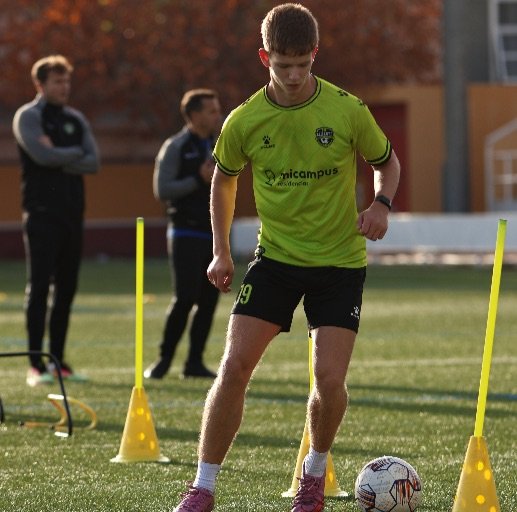
- Markers let you practice turns, dribbling patterns, and footwork.
- Targets help you get better at aiming and making quick decisions.
Consider your space, time, and what equipment you have. If your area is small, focus on wall drills and close control. With more space, try longer passes, turns, and finishing. If you only have 20 minutes, choose one tool and make the most of it.
To keep getting better, make your drills more challenging as you go. Try increasing the distance and speed, using fewer touches, practicing with your weaker foot, adding a timer, or changing the target quickly to adjust, like you would in a real match.
BUILD SMARTER SOLO SESSIONS
Use our drill guide to plan structured solo sessions.
Read the drill guide
What Are The Best Soccer Drills To Do By Yourself For All Levels?
The most effective drills are ones you can measure, repeat, and that feel like real situations.
You can use this simple table to help plan your session:
| Focus | Drill | Time | Progression (make it harder) |
|---|---|---|---|
| First touch | Wall pass → first touch into a marked “box” | 8 min | Smaller box, one-touch, alternate feet |
| Passing | 40 passes each foot to a wall target | 10 min | One-touch, longer distance, weak foot only |
| Close control | 1.5m “box dribble” + a turn at each corner | 8 min | Timed rounds, add feints, head-up rule |
| Dribbling | Cone weave → explosive exit sprint | 10 min | Tighter cones, add a finishing strike |
| Finishing | Shoot into corners/targets (both feet) | 10–12 min | Smaller targets, add first touch before shot |
| Fitness | 10–20m sprints with full rest | 8–10 min | Add deceleration + turn, add ball carry |
How Can You Train Football At Home With Limited Space?
With less space, you have to use better techniques. There’s no room for lazy touches, so you quickly learn to protect the ball with your body.
Begin by making sure your space is safe and you have the right surface. Move anything breakable, use a soft or futsal ball indoors, and wear shoes that match the floor. For example, use carpet or indoor shoes on smooth floors, and avoid studs on concrete. Warm up your ankles and hips for a few minutes before doing sharp turns.
What to do indoors:
- Ball mastery (sole rolls, inside-outside touches, toe taps)
- First touch into a small zone
- Tight turns (drag back, inside turn, outside hook)
What to do outdoors (small area):
- Wall passing + receiving
- Dribble + strike into targets
If your goal is to become a professional player, remember that home training is only one step. You’ll improve faster by training daily, playing real matches, and getting honest feedback. That’s why we offer a full professional program in Alicante with UEFA PRO licensed coaches and a structured development plan.
How Do You Train Football At Home Without A Ball Or Equipment?
You can keep improving your football skills even if you don’t have a ball. Work on your footwork, coordination, balance, speed, and strength. Stay sharp by making every rep count, paying attention to your posture, rhythm, and purpose, rather than just moving through the exercises.
Here’s a 15-minute workout you can do without a ball:
- 30 seconds of fast feet with light, quick steps
- 30 seconds of lateral shuffles, keeping your hips low and chest up
- 30 seconds balancing on one leg per side, keeping your eyes up
- 30s high knees (tall posture, fast arms)
- Rest for 30 seconds
- Repeat 2 rounds.
To finish, do the following exercises:
- Do 2 sets of 10 squats
- Do 2 sets of 8 lunges on each leg
- Hold a plank for 30 seconds, twice
For each exercise, pick one thing to focus on, such as “quiet feet,” “hips square,” or “eyes up.” Try to keep your attention on that goal for the full 30 seconds.
How Does Self Soccer Training Improve Individual Soccer Skills?
Training by yourself makes you more independent. Rather than waiting for the perfect session, you can start working on your touch, passing, and movement right away.
The players who improve the fastest usually focus on three main things:
- They regularly practice with their weaker foot,
- Track one skill each week, such as first-touch success, wall-pass accuracy, or sprint time,
- And keep their training sessions short so they stay engaged.
If you stick with this for 8 to 12 weeks, you’ll see real progress. Your basics will get sharper, you’ll feel more relaxed on the ball, and you’ll make better decisions in games.
What Solo Football Drills Work Best For Kids And Beginners?
Kids and beginners do best with simple drills and easy wins. The main goal is to build confidence by giving them lots of touches, teaching basic patterns, and setting small, achievable targets.
Here’s a practical 20-minute session that mixes fun with discipline:
- Start with a 5-minute fun challenge, like juggling or an obstacle course.
- Next, spend 10 minutes on wall passes, using two touches and both feet.
- Finish with a 5-minute dribble race and shot on target.
This balance works because the fun part keeps them engaged, the structure builds discipline, and when they hit targets and complete clean passes alone, their match confidence grows.
Quick safety note about heading: introduce it carefully with young players. The Football Association provides age-based guidance on how often and how much heading should be done in youth training (The FA’s heading in football guidance).
CHECK PROGRAMME OPTIONS AND PRICING
Compare timeframes and inclusions before you commit.
View pricing
Which Position-Specific Football Drills Can You Do By Yourself?
Position-specific training is most effective when it focuses on real match situations. The aim is not only to improve technique but also to build habits that match your role, helping you read the game quickly and make better decisions.
Defenders should focus on keeping an open body position, taking their first touch away from pressure, and making strong, accurate passes.
Try this drill: play a wall pass, open up your body, then make a driven pass to a marked target.
Midfielders should develop the habit of scanning the field, practice turning in tight spaces, and work on quick wall passes under pressure.
For this drill, pass the ball, scan to your left and right, receive the ball on a half-turn, and then play your next pass.
Wingers and strikers should work on taking their first touch into space, dribbling with purpose, and finishing with one or two touches.
In this drill, dribble forward, change direction, take a controlled first touch, and finish by shooting into a corner zone.
Goalkeepers: footwork patterns, passing range, mobility, and shoulder strength
For this drill, make 30 passes with each foot, changing the angle of your pass every five passes.
How Can You Improve Ball Control And Dribbling When Training Alone?
You get better at ball control by making close, clean touches in challenging situations, not just by practicing more. Good close control helps you keep the ball in tight spaces, protect it when pressured, and change direction quickly without slowing down.
Try this 12-minute routine, starting with the easiest drill and moving to the hardest:
- Spend 2 minutes practicing ball mastery while standing in one place.
- Next, dribble in a small box for 5 minutes, making tight turns as you go.
- Then, weave through cones for 5 minutes and finish each run with a quick burst forward.
To make these drills more like a real game, look up every three touches to scan the field, and end each set with a turn or a quick burst as if you’re getting away from a defender.
How Do You Practice Shooting Alone Without A Goalkeeper?
Work on getting your shots accurate before you try to add speed or power.
- Make targets by taping squares on a wall or marking off the corners of the goal.
- Practice using both your right and left foot.
- Try hitting the ball with your laces sometimes and with the inside of your foot at other times.
To make the drill feel more like a real game, take a touch to control the ball before you shoot instead of shooting right away.
Why Are Warm-Up And Cool-Down Important In Solo Football Training?
Warming up gets you ready to play, and cooling down helps you recover so you can perform well again next time.
To help prevent injuries, try warm-up routines like FIFA 11+, which are supported by solid research. Studies show these programs lower injury risk when done regularly. For more details, see FIFA’s injury prevention resources or PubMed for meta-analyses on FIFA injury-prevention programs.
To improve your mobility and flexibility, do dynamic movements for your ankles, hips, groin, and hamstrings before training. This helps you move faster. After training, use light stretching and mobility work to restore your range of motion and reduce stiffness the next day.
A good warm-up does more than just raise your body temperature. It gets you ready for sprinting, quick changes of direction, and first-touch skills, so you start the game feeling fast and in control instead of slow and at risk.
WANT A SHORT CAMP EXPERIENCE IN ALICANTE?
Camps give high-intensity training without a long commitment.
View soccer camps
What Equipment Helps Improve Solo Soccer Training At Home?
You don’t need much to train, but having a few tools can make your sessions easier and help you repeat drills more consistently.
Essentials (all you need to improve quickly):
- 1 Ball
- 4 To 8 cones
- A wall or another surface you can use for rebounds
Useful upgrades (good to have, but not required):
- Rebounder (more realistic returns, less chasing)
- Agility ladder (or tape lines) to help with footwork rhythm
- Mini goals or targets to work on accuracy
- Resistance bands for strength and stability
Upgrades can make training more convenient and add variety, but you don’t need them. What matters most is doing consistent, high-quality reps, not having fancy gear.