
Key Takeaways
- If you're being watched, it means someone has been observing you closely to consider you for a possible signing, not just that they've seen you play.
- Scouts usually watch you play more than once to check if you perform consistently well. One good game isn't enough.
- Scouts look at your decisions, your consistency, and your attitude. They care about more than just your goals or your great plays.
- If you're discovered, they'll probably observe you for a while or invite you to a trial. You probably won't get a contract right away.
- For young players, official clubs always have clear safety rules for trials. Parents are involved and must give their consent.
- You can't control who shows up, but you can control your environment.
Table of Contents
What Does Scouted Mean In Football?
Being scouted means someone qualified has watched you to decide if you should be tracked, invited, or recruited for a club, academy, program, or representation pathway.
This might seem straightforward, but many people misunderstand it.
What being “scouted” usually looks like in real life
A player is truly being scouted when:
A scout has picked you out by name, number, or position and is starting to assess your level.
They are making a report with notes, ratings, your strengths and risks, and how well you might fit certain roles.
Next, they might do one of the following:
- Watch you play again,
- Ask your coach or academy staff about you,
- Or move things forward by inviting you to a trial, a training session, or asking for more details.
From our experience, if a scout is truly interested, they do more than just watch your highlights and leave. They look for more information to reduce their risk.
What being “scouted” does not automatically mean.
It doesn’t automatically mean you are “signed.”
- You are “selected”
- You are the best player on the field.
- You will be contacted right away.
- It is guaranteed to lead to something.
Sometimes, being scouted is just the first step, and in 2026 serious interest still usually means follow-up watching, background checks, and seeing whether a player can repeat the same level more than once. You might only be on someone’s “maybe” list.
Why people misunderstand the term
People use the word “scouted” for all sorts of situations:
- A coach says, “A scout watched you today.”
- A friend says, “There were scouts at the tournament.”
- Someone sends you a message claiming to be a “recruitment” account and watches your video.
That is why we tell players to focus less on emotions and more on practical details:
If you cannot say who watched you, why they watched, and what happens next, you probably are not truly being scouted yet.
What Does Scouted Mean In Soccer Compared To Football?
In the UK and many other countries, “football” is what Americans call soccer. In the US and Canada, “football” means American football, so people use the word “soccer” to avoid confusion.
Scouting means the same thing in both sports.
- It means someone is watching to see if you can play at a higher level.
So when you hear “scouted in soccer” or “scouted in football,” it’s usually just a difference in wording, not in what actually happens.
Who Is A Scout In Football And What Do They Do?
A football scout watches players or teams and shares information to help with decisions. Scouts may search for new talent, recommend players for trials, or gather details about future opponents. They might work for a club, be hired from outside, volunteer at youth games, or work independently, sometimes with agencies.
Not every scout has the same level of influence. Scouts have different levels of influence, which can affect players. Grassroots and youth scouts often watch local leagues, school games, and regional tournaments. Academy scouts look for players with potential to develop, not just those who perform well now. Professional first-team scouts or recruiters focus on players who can fill a role right away, are physically ready, and make good decisions. At academy matches, scouts usually gather information for age-group recruitment or to shortlist players for trials, rather than immediately offering contracts.
A scout finds talent for a club or program. An agent works for the player, handling contracts, negotiations, and career planning. If someone comes to you and right away talks about money, fees, or “signing you,” that is not how real scouts act. If they say they are an agent, you should be able to check their license through official channels. FIFA has official information about football agents and offers a platform and directory to look them up.
For parents especially: if something feels confusing or rushed, take your time. Always check credentials before sharing documents or agreeing to anything.
IF A “SCOUT” CONTACTS YOU, READ THIS FIRST
Real scouts use official channels and clear safeguarding steps. This guide shows what legit contact looks like, what to ask for, and the red flags to avoid before you share any details.
What Does A Football Scout Do During Matches And Trials?
A scout watches with a purpose. They look for more than just “good moments.” Instead, they focus on actions you can repeat over and over.
During matches and trials, scouts usually pay attention to:
- Decision speed: how fast you make the right choice when under pressure
- Scanning: how often you look around and know what’s happening nearby
- Off-ball behaviour: your movement when you don’t have the ball
- Duels: how you compete, including your timing, body position, and controlled aggression
- Coachability: how you react after making mistakes or getting feedback
- Consistency: can you repeat quality actions every 5 minutes, not once per half?
Here’s something we see all the time:
Players try to impress with one big action (a nutmeg, a 40m shot) and forget the basics.
But scouts love players who do the boring things at a high level:
- Good first touch
- Simple pass with the correct weight
- Recover run after losing possession
- Correct positioning when the ball is on the other side.
When we run assessment sessions, we notice that scouts often focus on a player for five to ten minutes, then watch someone else, and later return to the first player. This is not random. They want to see if you can keep up your level, not just have a few good moments.
What Are The Two Main Soccer Scouting Roles?
In football, you’ll often hear about two main types of scouting roles.
- The first is talent identification scouting, which focuses on recruitment.
- The second is opposition or tactical scouting, which is centered on planning for games.
Both roles are considered scouting, but each has a different purpose.
Talent ID scouting vs opposition scouting
| Scouting role | Main purpose | Key questions scouts ask | Typical output |
|---|---|---|---|
| Talent identification | Find players who can join the club/academy | “Can this player play at our level?” “What’s their ceiling?” “Are they reliable?” |
Player report, shortlist, trial recommendation |
| Opposition/tactical | Help the team prepare for a specific opponent | “How do they build up?” “Who triggers the press?” “Where are the weaknesses?” |
Opponent analysis, tactical notes, clips for coaches |
How Does Scouting Work In Football Step By Step?
Scouting isn’t a single event. It happens in steps: notice, confirm, compare, and decide.
Here’s how scouting usually works in real life:
Step 1: A scout gets a reason to watch you
That reason might be:
- A coach recommends you,
- You perform well in a tournament,
- Your name comes up through a network,
- You play in a match where scouts are already watching someone else.
Step 2: First observation, also called the “is this interesting?” watch
During the first watch, many scouts are deciding:
- Is this player relevant to our needs?
- Is the level real, or just a moment?
- Does the player have at least one standout “tool” (pace, vision, duel dominance, composure)?
Step 3: Second and third observations, sometimes called the “confirm it” watch
At this stage, true scouting is different from the hype.
Scouts often want to see you:
- Against a different opponent,
- In a different game situation, whether the team is winning or losing,
- When you’re tired,
- After a mistake.
A player who looks great when things are easy can seem average when the game gets tough.
Step 4: Reporting and internal review
In a professional setting, the scout usually submits:
- Notes,
- Ratings,
- Role fit, such as “as an 8 in a 4-3-3…”,
- Developmental risks, like “needs physical strength” or “decision speed inconsistent”,
- And a recommendation (monitor / invite / pass).
Step 5: Shortlist, then contact, then move to the next step.
The next step might be:
- A training session invitation,
- A trial invitation,
- Monitoring you for a longer period,
- Or, at the youth level, speaking to your current club or parents.
At this stage, professionalism matters. Most of the time, the club, not the scout, decides the next step.
Step 6: Decision, which can happen quickly or take a while, can vary. Sometimes a club invites you within a week, while other times they may watch you for several months.
This is because recruitment costs a lot and is risky, so clubs want to be as sure as possible.
If you want to always be in the right environment,
You can’t make scouts show up to a random Sunday match.
But you can choose to be in a place where:
- Training is measured,
- Matches are filmed/analysed,
- That’s why our process focuses on both development and exposure. If you want to be considered for our programmes, you can apply using our online form here: Registration form
READY FOR A REAL SCOUTING ENVIRONMENT?
If you want proper feedback and real exposure, you need more than a few highlight moments. We train, test and review players in a structured programme so your level is clear over time. Apply and we’ll explain the next steps.
Apply to join
Why Do Scouts Come To Football Trials?
Scouts attend trials to confirm what they already think about players, not just to watch for fun. Trials are meant to answer specific questions about a player, not to discover new talent. There are two main types: open trials, which include many players with different skill levels and less certainty, and invite-only trials, which are smaller, more organized, and usually feature players who have already been chosen ahead of time.
A trial lets scouts quickly see if a player can keep up with a faster pace, follow basic tactics and instructions, and compete well even when things aren’t going smoothly. These qualities are more important than just showing off skills.
But doing well in a trial doesn’t usually mean you’ll be picked. Trials are short and only show a small part of what a player can do. The most important decisions come after scouts watch players over a longer period, see how they perform in matches, and check their background, not just from one session.
In official football, trials are regulated, especially for young players. FIFA rules, as explained by The Football Association, require a formal trial agreement, medical coverage for injuries, limits on trial length based on age, and extra protections for minors, like needing parental consent and a club contact person.
So, if you are invited to a trial but things feel informal, unclear, or unprofessional, take it as a warning sign rather than a real chance.
What Do Football Scouts Look For In A Player?
Scouts look for evidence that your skills will succeed at a higher level. They focus on actions you can repeat under pressure, not just vague “potential.” They want to see that what works for you now will still work when the game speeds up.
Scouts usually evaluate players in five main areas. Technical skills include first touch, passing, receiving under pressure, and finishing. Tactical skills cover positioning, scanning, timing, and decision-making. Physical traits are speed, repeat-sprint ability, balance, and strength in duels. Mental qualities include composure, resilience, and competitiveness. Professional traits are attitude, communication, coachability, and consistency.
Scouts know no player is perfect. They consider if your strengths are worth developing, if your weaknesses can be improved, and if your mentality fits the team. That’s why goals and assists aren’t everything. Scouts want players who help the team even when they’re not scoring, make smart choices often, and keep standards high.
Small details make a difference. Scanning before you receive the ball, playing simply when needed, reacting quickly during transitions, communicating clearly, and competing without being reckless all stand out. One important rule: make sure you look professional even when you don’t have the ball. Many players lose focus during these moments.
Finally, parents and players should remember that selection is not just about talent, especially in youth football. Research published on PubMed Central shows that older and more physically mature players are chosen more often. This doesn’t mean scouts are wrong. It means that timing in development matters, so late developers shouldn’t worry.
What Happens When You Get Scouted In Football?
When you get scouted, three things can happen. Sometimes, nothing changes right away because you were seen but not chosen. Other times, a scout will keep watching you and track your progress. You might also get invited to a trial, a training session, or be asked for more information. Many players make the mistake of thinking that interest always means a firm offer.
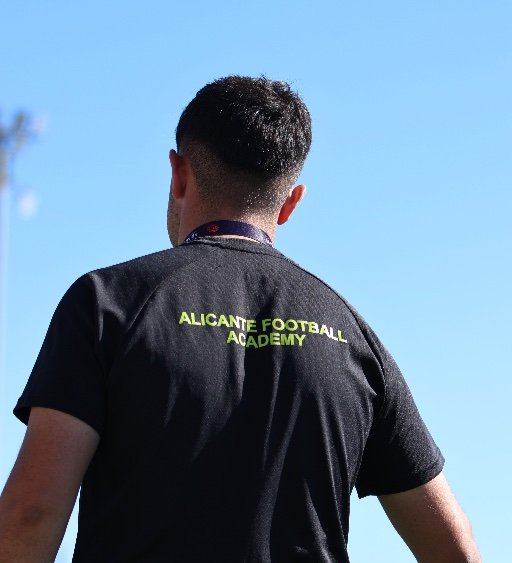
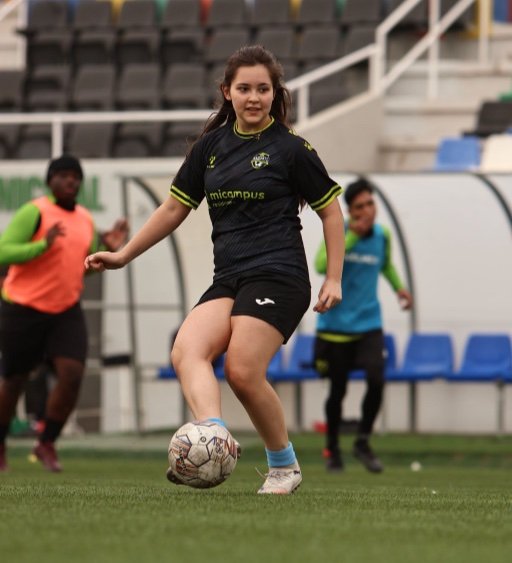
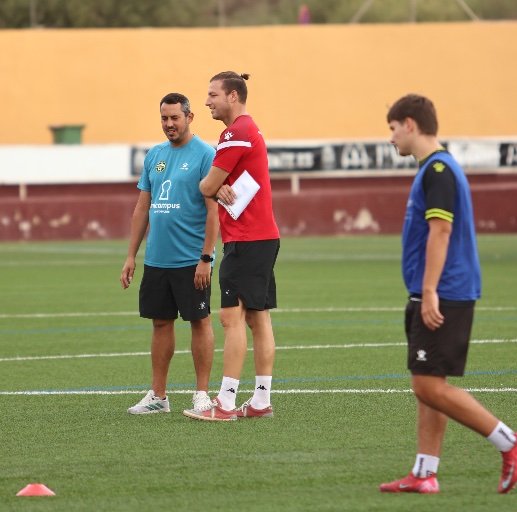
Scouts monitor players more often than most people realize. They usually watch several of your games, see how you perform against stronger teams, check your injury history and physical development, especially if you are young, and talk to your coach about your attitude and training habits. At Alicante Football Academy, we see this often. Scouts come to matches, talk to staff before approaching players, gather information, and then decide if they want to keep following someone.
If you or your child is contacted, how you respond matters. Stay calm and don’t agree to anything emotionally. Ask who they are and who they work for. Request official contact details, such as a club email address, website, or a formal invitation. If the player is a minor, involve parents or guardians immediately. Never pay for “being scouted,” and if an agent is mentioned, verify them through official systems.
Your behavior off the field matters too. Scouts pay attention to more than your skills during games. They watch how you communicate, deal with pressure, and make choices.
What Age Do Kids Get Scouted In Soccer?
Kids can get noticed at any age, but organized scouting usually begins when players reach certain important stages.
- These include joining an academy,
- Reaching scholarship stages,
- And the years when their physical and tactical skills develop more quickly.
Many countries offer academies for younger kids, but what matters most is this:
Every player’s timeline is different.
- Some players stand out early because they develop physically before others.
- Others get noticed later, often because their decision-making skills improve a lot between ages 15 and 18.
- Some are late developers who make big progress after a growth spurt or with the help of supportive coaching.
If you’re a parent, keep this in mind:
If your child isn’t being scouted at age 12, it doesn’t mean they won’t succeed. It usually just means they need:
- Better training,
- More chances to compete,
- Or simply more time.
Instead of worrying about age, here’s a better way for parents to look at things:
Ask yourself these questions:
- Is your child getting better each month?
- Are they strong not just physically, but also in their technical and tactical skills?
- Can they play well against tougher opponents?
- Do they enjoy training enough to work harder than most kids?
If you can answer yes to these questions, you’re on the right track.
How Does Someone Become A Soccer Scout?
To become a scout, you need two main things:
- First, you need a trained “football eye.” This means knowing what to look for.
- Second, you need a clear way to report what you see so others can make decisions.
Most scouts start by doing a few key things:
- They coach,
- analyze matches,
- volunteer with clubs,
- and build experience through education and mentorship.
Official courses and learning.
The FA has a free online course called Introduction to Talent Identification. It takes about 1 hour and 20 minutes to complete.
UEFA’s Elite Scout Programme is a three-month course for those seeking a career in scouting (UEFA Academy brochure).
If you’re a player reading this, remember that the best scouts are trained. They do not guess.
CHECK PROGRAMME LENGTHS AND FEES
Scouting rewards consistency, but different players need different timeframes. Compare our short stays, camps and longer programmes and pick what fits your stage and budget.
View pricing
Which Football Positions Are Harder To Get Scouted?
It can be harder to stand out in some positions because the best work is often subtle, happens away from the ball, or stops problems before they begin. Centre-backs may seem quiet since they read the game early. Defensive midfielders are noticed for their positioning and choices. Full-backs do a lot of one-on-one defending and recovery runs that often go unseen. Goalkeepers have fewer chances to make an impact, but their mistakes are more noticeable. Scouts do watch these roles, but players need to show their value by communicating clearly, leading the team, making steady decisions, and showing strong basics.
Attacking roles often seem easier to get noticed in because goals and assists are easy to see, and highlight clips stand out. Wingers, number 10s, and strikers can get attention more quickly, but there is much more competition. The real advantage is not your position, but your clarity. Know your role, understand your main strength, and show you can deliver it every week.
What Is The Easiest Position To Get Scouted In Soccer?
It can be harder to stand out in some positions because the best work is often subtle, happens away from the ball, or stops problems before they begin. Centre-backs may seem quiet since they read the game early. Defensive midfielders are noticed for their positioning and choices. Full-backs do a lot of one-on-one defending and recovery runs that often go unseen. Goalkeepers have fewer chances to make an impact, but their mistakes are more noticeable. Scouts do watch these roles, but players need to show their value by communicating clearly, leading the team, making steady decisions, and showing strong basics.
Attacking roles often seem easier to get noticed in because goals and assists are easy to see, and highlight clips stand out. Wingers, number 10s, and strikers can get attention more quickly, but there is much more competition. The real advantage is not your position, but your clarity. Know your role, understand your main strength, and show you can deliver it every week.
How Can Parents Know If Their Child Is Good Enough For Scouting?
The best way to know if your child is ready for scouting is if they can consistently perform well in situations that are a bit more challenging than what they are used to.
It’s not about doing it once, but being able to do it again and again.
Here are some signs that show a player is truly ready to be evaluated at a higher level.
Look for patterns like:
- They show strong technical skills, even when under pressure.
- They make smart choices quickly during play.
- They handle setbacks.
- They stay focused and disciplined in training on their own.
- Coaches rely on them during key moments in games.
Common mistakes parents should avoid when comparing players
Try not to fall into these traps:
- Only comparing your child to the weakest teams
- Putting too much value on goals scored in easier matches
- Taking every compliment from strangers online too seriously
- chasing exposure before the player is stable technically
When parents ask us for honest feedback, we look for the same things that scouts do:
Can the player keep performing at this level, and do they respond well to real coaching?