
Key Takeaways
- If you want to be faster in football, work on your first steps, how you brake and how quickly you can accelerate again, not just your top speed.
- Since most sprints in soccer are short, it's better to practice sprints of 5 to 20 meters rather than focusing on many 40-meter runs.
- Often, better results are achieved by combining speed training with strength and plyometric exercises, rather than simply running more.
- If you always practice speed when you're tired, you're really just teaching your body to run when it's fatigued, not to actually be fast.
- You will play faster in matches if you combine your physical training with good positioning and making the right decisions on the field.
- To track your progress, time your 10-meter sprints and see how well you can repeat them towards the end of your training sessions.
Table of Contents
How To Get Faster For Football?
To get faster in football, work on your acceleration, top sprint speed, agility, and being able to repeat these efforts even when you are tired.
A lot of players overlook something important:
Speed in football depends on several different things.
If you only practice speed drills, you will reach your limit quickly.
- Can you win the first 3 steps?
- Can you stop fast and change direction without losing balance?
- Can you repeat high-intensity actions late in a match?
- Can you do it while thinking about the game and making decisions? That is why it helps to break speed into three categories:
Raw speed is similar to track sprinting.
This means running fast in a straight line. It is helpful, but it is only one part of what you need.
Football-specific speed
is your ability to speed up, slow down, turn, and then speed up again in short bursts, usually over 5 to 20 meters.
Game speed
This is how quickly you read the game, make decisions, and act. Two players might have the same sprint time, but the one who reacts sooner and chooses the right angle will always seem faster.
Players who are truly fast in matches usually work on all three types of speed, and that matters even more in 2026 as the game keeps rewarding players who can combine sprinting power, sharp reactions, and decision-making under pressure.
How To Become A Faster Football Player Over Time
Some players notice small improvements after a few weeks, but real progress in sprinting usually comes from consistent training over several periods, often lasting more than eight weeks.
This timeline isn’t just meant to motivate you. It’s both realistic and practical.
For example, a study of young male soccer players found that plyometric jump training helped them sprint faster. The biggest improvements over 10 meters happened when the training lasted more than 7 weeks and included over 14 sessions.
For professional soccer players, doing strength training during the season has also been shown to improve both their maximum squat strength and their short sprint speed.
Players don’t improve just by working harder. Progress comes from following better training plans, like these:
- Progressive overload, which means making your workouts a little more challenging as you go
- High-quality repetitions, where you focus on real sprinting effort instead of just jogging
- Proper recovery matters because speed workouts are tough. If you don’t give yourself enough time to recover, your sprints won’t be as strong. Good sprints are what make you faster
Here’s a simple rule: If you want to get faster, make sure you train when you’re rested enough to really move at your top speed.
If you’re too tired, your workout becomes more about conditioning. Conditioning is important, but it’s not the same as building speed.
How To Run Faster In Soccer Matches
You can run faster in matches by making smarter movement choices and training in ways that reflect football’s stop-start style.
Football isn’t a track event.
Research shows that international players usually cover about 8 to 14 kilometers per match. Most of this distance is at a lower intensity, with only a smaller part at high intensity.
Besides covering a lot of ground, key moments in football often come from short sprints and repeated bursts of speed. One study of professional players found they sprint about 11 times per match, and about 90% of those sprints last less than 5 seconds.
If you want to be faster in matches, your training should get you ready for:
- Short accelerations (5–15m)
- Changes of pace
- Changes of direction
- Repeated efforts with incomplete recovery
But speed in football is also about how you think during the game.
During games, you can seem faster when you:
- Start earlier (anticipate the next pass)
- Take a better line (angle your run, don’t run behind the play)
- Arrive on balance (so you can act immediately, not take extra steps)
Here’s one simple habit we encourage players to use:
Before the ball arrives, you should already know your first action.
This is how real speed appears when the game is on the line.
READY FOR A PROFESSIONAL SPEED TRAINING ENVIRONMENT?
If you’re serious about getting faster and want structured training, matches, and honest feedback, the next step is an application. We’ll review your details and explain how the process works.
How To Run Fast While Playing Football Without Losing Control
If you want to run fast and stay in control, focus on your posture, how you slow down, and how you move with the ball at speed. In football, speed only helps if you can keep the ball, read the game, and change direction smoothly.
A lot of players slow down during games, not because they aren’t fast, but because the ball holds them back. Taking big touches, turning with a stiff body, or looking down for too long can all make you slower.
Instead, we focus on simple habits. When you’re near the ball, use short steps and keep your touches close. If you have space, take longer strides and pick up speed. Slow down before you turn, not while turning, and always remember: scan, touch, scan.
Here are two drills to try. First, sprint 10 to 15 metres to meet a pass, take one touch to push the ball forward, then speed up for another 5 to 10 metres. Second, sprint 10 metres, and when you hear a clap or a call, slow down quickly and turn 90 or 180 degrees. That’s when speed in football becomes more than just running fast.
How To Run Faster Without Getting Tired In Soccer
You can maintain your speed for longer by working on your aerobic base, repeated-sprint ability, and recovery between efforts.
In football, quick movements use anaerobic energy, but your ability to repeat them depends heavily on your aerobic fitness.
Aerobic fitness helps you recover after short periods of intense activity, making it easier to sprint again and again.
That’s why some players start fast but then slow down.
To improve this, your conditioning should match the demands of football:
- short intense bursts
- limited rest periods
- repeated efforts
- under control to keep your technique solid
Here are three conditioning methods we use, depending on each player:
- Repeated sprint sets
Example: 6 x 20m sprint, walk back recovery, rest 2–3 minutes, repeat 2–3 sets. - Tempo intervals
Example: 15 seconds hard / 15 seconds easy for 6–10 minutes. - Small-sided games
Great for match fitness, especially when the rules force repeated accelerations.
One more honest point:
If your hamstrings are always tight or you keep picking up minor injuries, you won’t be able to maintain a consistent speed. Preventing injuries is part of good conditioning.
At Alicante Football Academy, we include this in our weekly training. We track how much work players do, check on their wellness, and plan training intensity so they can train hard without getting injured. This is how you build lasting speed.
If you’re also aiming to play in Spain, that’s another reason structured conditioning matters. We don’t just train players in isolation. We prepare them for the level of match intensity they’ll face here and support them in the pathway of presenting to and connecting with pro clubs in Spain (without promising outcomes).
How To Increase Sprint Speed For Football
If you want to sprint faster, work on your acceleration, practice running at top speed, build strength, and improve your elastic power by following a clear plan.
Many people think one exercise alone will make them faster, but that’s not true.
It’s better to focus on two main types of sprints instead:
Acceleration, which covers the first 0 to 10 or 20 meters.
This skill helps you win most one-on-one situations, like getting to the ball first, finding open space, or making the first tackle.
Max speed, which is when you lengthen your stride and run as fast as you can.
This is important during breakaways, when you need to run back to defend, or when you’re chasing a ball that goes behind the defense.
Because most sprints in games are short, you should spend most of your training time working on acceleration. Sprint studies back this up, showing that about 90% of sprints last less than five seconds according to one professional analysis.
Here are some simple and effective tips we use to coach acceleration:
- Push the ground back with your feet and try not to stand up straight too early.
- Take a strong first step and focus on driving yourself forward quickly, rather than just reaching forward.
- Use strong arm movements because your arms help set the rhythm for your legs.
- Pay attention to your first three steps, then slowly build up your speed. Stay calm and avoid taking steps that are too long.
When you reach top speed and your body is upright, remember these tips:
- Keep your posture tall.
- Relax your shoulders.
- Try to make quick contact with the ground.
- Drive your knees up and use good front-side running form. Try not to kick your heel up behind you.
It’s also important to measure your speed. If you don’t time or track your sprints, you won’t know if your training is working.
CHECK PROGRAMME OPTIONS AND PRICING
Different timeframes suit different players. Short stays, camps and longer programmes. Compare options and what’s included before you make a decision.
View pricing
Exercises To Improve Speed In Football
The best speed exercises are ones you can get better at, recover from, and practice often. Random workouts don’t help much because speed is both a skill and a kind of power. It improves most when you focus, avoid too much fatigue, and follow a clear plan.
That’s why we use a simple method, where each part helps build speed without interfering with the others. Sprint training is about doing good reps, not just more reps. We use 5 to 20 metre sprints to work on acceleration, and sometimes 20 to 40 metre sprints for top speed. We always rest fully so every sprint is fast.
Plyometrics help you build elastic power and turn strength into speed. Plyometric training can improve sprinting in young footballers, especially over time. Common exercises include pogo jumps, bounds, squat jumps, and single-leg hops when the athlete is ready.
Strength training helps you build the force you need to push off the ground. Research on professional football players shows that getting stronger in the squat also leads to better short-sprint times after a strength program. Key exercises are squats, trap-bar deadlifts, split squats, hip thrusts, and calf raises.
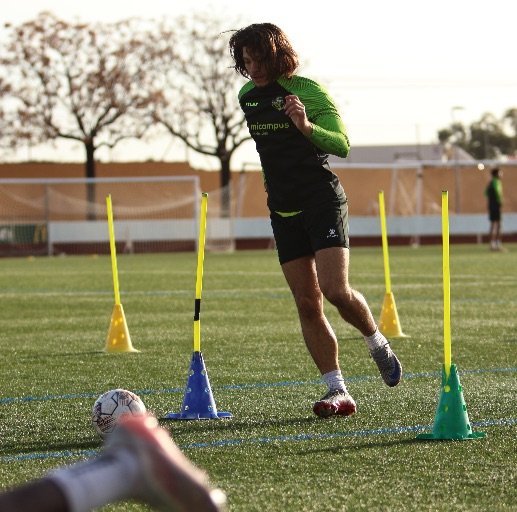
Agility and deceleration training connect speed to real football movements. The goal is to stop quickly, change direction smoothly, and speed up again without losing balance or control.
Finally, conditioning should help your speed, not slow you down. So, skip long, slow runs every day and focus on football-specific drills that let you repeat high-speed actions many times in a match.
How To Implement Speed Workouts To Get Faster For Soccer
A simple weekly structure beats “more sessions” every time.
Here’s a realistic week for many players (adjust based on team training/matches):
- Session 1 (Speed + acceleration)
6–10 x 10–20m sprints (full rest)
3–5 COD drills (low volume, high quality)
10–15 mins technical work at speed (receiving/finishing) - Session 2 (Strength)
Squat or trap bar deadlift
Split squat
Hamstrings
+ calves
Core - Session 3 (Max speed exposure + ball)
4–6 x 20–40m sprints (full rest)
Sprint → receive → finish drills
Light plyometrics - Session 4 (Conditioning / small-sided games)
Repeated sprint work or game-based intervals
Two important rules:
- Put speed work early in the session, after a proper warm-up.
- Don’t chase volume. Chase quality and consistency.
How To Get Quicker In Football Using Agility Training
You get quicker by improving your ability to slow down, change direction, and react to situations you might face in a real game.
A lot of people mix up “speed” and “quickness.”
- Speed is how fast you can move straight ahead.
- Quickness is how fast you can stop, change direction, and get moving again.
You can spot quickness in actions like these:
- pressing
- 1v1 defending
- receiving under pressure
- short combinations
There’s something else important to remember:
Planned change-of-direction speed and reacting quickly to surprises are not the same thing.
If you only practice with pre-planned cone drills, you might still have trouble reacting during real games.
What Are The Best Football Speed Agility Drills?
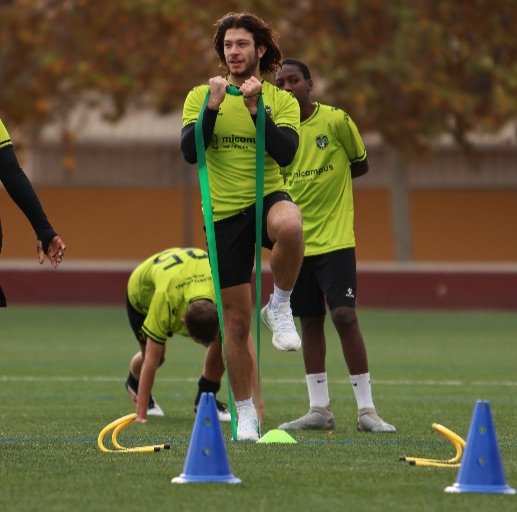
The best agility drills combine good movement mechanics with decision-making.
Here are options we use (pick 3–4 per week, not all at once):
1) 5–10–5 shuttle
- Focus: braking + re-acceleration
- 4–6 reps, full rest
2) Box drill (forward / lateral / back)
- Focus: multi-direction control
- 3–5 rounds
3) M-shape cuts (cones)
- Focus: low hips, sharp angles
- 3–5 reps each side
4) Ladder as a warm-up tool
- Focus: rhythm and coordination (not “speed training”)
- 5 minutes, then move on
5) Mirror drill (partner reaction)
- Focus: reactive agility
- 3 x 20–30 seconds
6) Turn on cue
- Sprint 10m → coach calls left/right/turn → react
- 6–10 reps
If you want your agility training to transfer:
- keep reps short
- keep intent high
- keep rest long enough to stay sharp
How Does Strength Training Help You Get Faster In Football?
Strength training is important because sprinting relies on how much force you can put into the ground, over and over. If you don’t have enough strength, your acceleration will suffer. Some players have good technique but still struggle to beat opponents because they aren’t strong enough.
That’s why we focus on strength training that fits what football players actually need. The goal is to build stronger legs and hips, protect the hamstrings, and increase power for acceleration, without adding extra fatigue or unnecessary muscle size.
A straightforward plan is to do two strength sessions each week. Start each session with a main lift like a squat or trap-bar deadlift, then add split squats for single-leg strength. After that, include a hip hinge movement such as an RDL or hip thrust, do hamstring exercises that focus on the lowering phase, and finish with calf training. Many players skip calf exercises, but they’re important for sprinting.
Preventing hamstring injuries is a key part of this plan. Strong, well-trained hamstrings help players sprint faster, slow down safely, and repeat high-speed runs with confidence.
You don’t have to overthink this. The real secret to getting faster and staying strong is to stick to the basics every week.
How Do Running Mechanics Improve Soccer Speed?
Good running mechanics help you run faster because they cut down on wasted energy and make sure your effort pushes you forward. Even strong runners can be slow if their sprint technique is poor.
At the start of a program, players often have similar issues. Many stand up too early and lose forward drive as they speed up. Some take steps that are too long, landing far in front and slowing down. Slow or weak arm movement is also common, and when the arms move slowly, the legs can’t move quickly either.
The key is to keep things simple. When you start a sprint, lean your body forward, push your shins ahead, and drive your arms powerfully. As you stand up, stay tall with relaxed shoulders, make quick, light steps, and keep your hips steady without swaying.
Good running mechanics help you run faster and avoid injuries. When you get tired and your form breaks down, you slow down and your risk of getting hurt increases.
PRESENT YOURSELF LIKE A SERIOUS PLAYER
Speed is easier to notice when your video and information are clear. This guide shows how scouts typically reach out and how to reply professionally.
Read the scouting contact guide
How Is Speed Different With The Ball Vs Without The Ball In Football?
How fast you move with the ball depends on your touch, body position, and decision-making. When you run without the ball, you have more freedom. With the ball, you need to time your touches with your steps, watch for pressure, and be ready to speed up after each touch.
This is why players often feel quick when sprinting straight but slower in real games. The ball forces you to think, keep your balance, and stay in control. If any of these are off, you lose speed on the field.
To get better, train your speed and football skills at the same time. Simple drills are most effective. For example, dribble 10 metres, let the ball go, then sprint onto a return pass. Or sprint onto a pass, take your first touch into space, and speed up again. You can also try a short sprint, dribble into the shooting zone, and finish quickly while under time pressure.
The aim isn’t to show off with fancy dribbling. It’s to move the ball at game speed while staying balanced, alert, and ready to speed up.
What Are The Core Components Of Speed In Football?
Football speed is complex because players need to be quick in different ways during a game.
Wingers rely on running at their fastest. Midfielders must speed up again and again. Defenders work on stopping fast and getting back up to speed.
Here is an easy way we use to profile a player:
| Speed component | What it looks like in matches | What to train | Simple examples |
|---|---|---|---|
| Acceleration (0–10m) | Winning first steps, pressing, short duels | Strength + short sprints | 10–20m sprints, sled/hill sprints |
| Max speed | Running in behind, recovery runs | Sprint exposure + mechanics | 20–40m sprints, flying 10s |
| Deceleration + COD | Turning, defending 1v1, reacting to passes | Braking mechanics + COD drills | 5–10–5, box drills |
| Repeated sprint ability | Staying sharp late in matches | Football-specific conditioning | Repeated sprint sets, SSGs |
| Reactive agility | Responding to opponents, unpredictable cues | Decision-based agility | Mirror drill, cue turns |
| Speed with the ball | Carrying into space, counter-attacks | Touch at speed + scanning | Sprint-to-receive drills |