
Key Takeaways
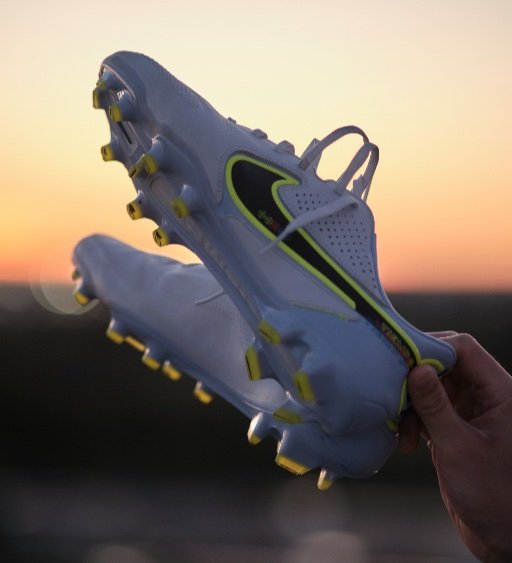
- Soccer cleats help you move in any direction and control the ball well. Their studs are distributed both on the front and back of the cleat.
- Soccer cleats typically have an additional stud at the toe and a more robust construction. This facilitates quick starts, physical play, and performance in different positions on the field.
- The best football boots for you depend on your sport, the pitch you play on, and the rules. Brand and price matter less than these factors.
- Soccer cleats can work well for flag football, but always check your league's equipment rules first.
- More grip isn't always better. For safety, it's important to have adequate traction and be able to lift off the ground cleanly.
Table of Contents
Difference Between Soccer And Football Cleats
The main difference is how the sole grips the ground and how the upper part protects your foot.
Soccer players often speed up, slow down, turn, and kick the ball. For this reason, soccer boots are made to be low to the ground, lightweight, and have evenly spaced studs.
American football has more stopping and starting, as well as more physical contact. Many football cleats are built for quick sprints and provide extra support to handle collisions and blocking.
| Feature | Soccer Cleats | Football Cleats (American football) | Why It Matters |
|---|---|---|---|
| Toe stud | Typically no central toe stud | Often has a toe stud (model-dependent) | Toe stud can help first-step drive; soccer avoids it for touch/safety |
| Stud layout | Balanced for multi-direction cuts | Often more aggressive “drive” traction | Different movement patterns, different traction needs |
| Upper | Thinner for ball feel | Often thicker / more supportive | Touch vs protection |
| Collar | Low-cut common (some mid/high) | Mid/high more common (not universal) | Support vs ankle freedom |
| Best fit for | Turning + touch + endurance | Burst + contact + anchoring | The “right” cleat matches the sport |
Referees in soccer help keep everyone safe by checking players’ equipment. The Laws of the Game do not allow anything dangerous, so unsafe gear has to be taken off before or during a match. That’s why we remind players that the condition of their studs matters as much as their shape. If your studs have worn edges, are loose, or have sharp tips, they can be unsafe and might mean you have to leave the field. This rule is fair and helps protect everyone.
Is There A Difference Between Soccer And Football Cleats For Kids?
When it comes to kids, comfort, stability, and safety are the most important things.
Usually, the issue isn’t the brand, it’s the size.
- If you buy boots that are too big so your child can grow into them, it often causes heel slipping, blisters, and awkward movement.
- Boots that are too tight can press on the toenails and the ball of the foot.
Here’s a simple check you and your child can do before practice:
- Is the heel staying in place? When your child jogs, their heel shouldn’t lift up.
- Can your child move their toes freely? There shouldn’t be any cramping when they stop. Also, check that the studs are smooth and secure, with no sharp points or wobbling.
One more thing to remember: youth leagues can have stricter rules than professional games. Even in organized youth soccer, the rules are there to make sure cleats are safe and checked, not just to allow any pair.
SHOW UP WITH THE RIGHT BOOTS
We’d rather spend your first session coaching football—not fixing avoidable boot problems. If you’re coming for trials or training, we’ll help you get the right footwear for your surface and level.
apply for trials
Can I Wear Football Cleats For Soccer Safely?
We usually don’t recommend it, and in some cases, you may not be allowed to play.
Here are three common problems:
- Toe studs and sharp edges can cause issues. Football or baseball-style toe spikes are often considered unsafe during tackles or if someone accidentally steps on your foot.
- Cleats that grip too much in the wrong direction can make it hard to pivot and may leave you feeling stuck.
- Thicker uppers can make it harder to feel the ball, which can affect your first touch and passing accuracy.
Soccer rules put safety first. If your boots are considered unsafe, you will be asked to remove or change them.m.
Here’s our practical advice: If you only have football cleats and you’re joining a soccer session, bring turf shoes or trainers as a backup. It’s better to train safely in flats than risk an injury you could avoid.
Can Soccer Cleats Be Used For Football Games?
You can sometimes use soccer cleats, but it depends on whether you play tackle or flag football, the type of field, and your league’s rules.
Tackle Football
Soccer cleats aren’t the best option for tackle football because they often don’t have these features:
- A toe stud that helps you push off from your stance
- A sturdier design to protect your feet during contact and blocking
Rules can be strict, too. For example, high school football (NFHS) has detailed cleat requirements and limits nonremovable cleats to no more than ½ inch from the sole to the tip.
In the NFL, the rulebook bans some cleat shapes and does not allow detachable kicking toes.
Flag Football
Soccer cleats are a good fit for flag football because the game focuses on space, speed, and quick moves instead of contact.
But rules still apply. NFL FLAG guidance states that metal cleats are not allowed.
If you play both sports and it’s possible, we recommend having two pairs of cleats. If you can only get one, choose based on the sport and field you play on most often.
PLAN YOUR SEASON BUDGET (INCLUDING BOOTS)
If you’re deciding between one “do-it-all” pair or two specialist pairs, it helps to plan your season properly.
view academy fees
Do You Need Cleats For Flag Football?
Not always, but they’re usually worth it for consistent traction.
If you’re new to the game, here’s a good option to start with:
- Wear molded, non-metal studs when you play on grass.
- On short, hard artificial turf, choose turf shoes with small rubber nubs.
Be sure to check your league’s rules first, because in 2026 footwear rules still vary widely and many flag football leagues are stricter about stud shape, outsole type, and what is considered safe on artificial surfaces.
How Can You Tell Soccer Cleats From Football Cleats?
We use this check whenever a player brings their boots and asks, “Coach, are these allowed?”
Check The Toe
- If you see a single stud right under the toe, the cleat is probably made for football or baseball.
- Soccer boots usually have a clear area at the toe, with the studs starting farther back.
Check The Build
- Football cleats often feel sturdier and sometimes cover more of the ankle.
- Soccer boots are usually thinner and more flexible, which helps with ball control.
Check The Stud Spread
On soccer boots, the studs are spread out to help you move quickly in any direction. Football cleats are designed to give traction for forward movement and to stay anchored.
Our 60-Second Stud Check
Before a session, we can often spot the wrong type of outsole during warm-ups. Players might hesitate on turns, slip when changing direction quickly, or you might hear a stuck sound when the studs don’t release.
Here’s a quick check we use, and you can try it at home too:
- Run your finger along each stud. If you feel any sharp edges or cracks, don’t use those boots.
- Twist the sole to check for loose or rattling studs, especially if they are detachable. If you find any, don’t use those boots.
- Clean the bottom of the boot because packed mud or rubber pellets can affect how well it grips the ground.
- Make sure your studs match the field. Long studs on hard ground can cause pressure points, and short nubs on wet grass can make you slip.
This quick routine helps keep training safer and lets you focus on playing instead of worrying about your boots.
Do Football Cleats Have A Toe Stud And Why?
Many models have this feature, but not all of them do.
The toe stud helps with quick acceleration and drive, especially when starting from a standing position. If you see a noticeable toe stud, the shoe is mainly for football, and you should not assume it is allowed in soccer.
Why Is There No Toe Cleat In Soccer?
Soccer boots are designed without a central toe stud to help players control the ball better and to prevent injuries.
When playing, you often use the front of your foot for dribbling and shooting. A toe stud can create pressure and make it harder to move smoothly.
Why Do Football Kickers Wear Soccer Cleats?
Many specialists pick soccer-style boots because they help make cleaner contact with the ball across the instep. This results in more accurate and consistent kicks.
These boots are more flexible at the front, which helps the foot move naturally and improves timing when kicking.
Because these boots are lighter, the foot stays closer to the ball. This gives better control and touch when kicking.
But competition rules still matter. Some designs, like detachable or extra-long kicking toes, are clearly banned in the NFL rulebook, even if they work well.

Do Soccer Cleats Have More Grip Than Football Cleats?
No, not automatically. The grip just works differently.
Soccer cleats usually grip well when you move sideways, while football cleats often feel grippier when you push forward. The main thing is to match the cleat’s traction to the surface so your foot can grip and release safely.
This matters even more on artificial fields. FIFA’s Quality Programme for Football Turf checks how players interact with the surface and gives quality marks (FIFA QUALITY and FIFA QUALITY PRO) to approved fields.
For top competitions, like the Champions League, UEFA only allows artificial turf if it is certified as FIFA Quality Pro.
Are Soccer Cleats Lighter Than Football Cleats?
Yes, most of the time.
Soccer cleats usually have a thinner upper and are lighter, so they feel less heavy during long games. But if you play a lot of physical matches, you might want something more supportive.